Here I describe terms, what they mean and how they are used in Germany. One often reads or hears terms such as liberal, conservative, social democratic, right, left, extreme or populist. In the political discussion and in the media it is assumed that one understands them. The definition of the terms themselves is often debated and at the same time, different people often understand different things under the terms. That alone within Germany. In other countries the same terms are sometimes understood differently. All in all, I think it’s important to write about it. Even if I can only give an overview.
In this post I will write about political philosophies such as liberal, conservative, social democratic, green, nationalistic. Also deal with the simplest view of the political spectrum, the division into “left” and “right”. There are also styles, methods and characteristics: radicalism, extremism, populism. Finally, there are combinations of the terms. With it you can express what you want to designate more precisely.
political philosophies (basic ideas)
To be simple, political philosophies describe how people imagine the best way to solve problems in society. They are ideologies, that containing ideas and principles logically fit together.
Liberalism (“liberal”)
focuses on individual freedom and rights for people (freedom over the power of the state, rulers, religions, etc.)
The state should stay out of people’s lives as far as possible and only be responsible for a few tasks (above all security and compliance with laws)
Each person should decide for himself about his life, but bear his own responsibility for it (e.g. if you are poor because of your own wrong decisions)
In Germany today, liberalism is primarily associated with the economic sector. Freedom for people also means that they can operate freely. Pure economic liberalism calls for the dismantling of rules and regulations for companies so that they can develop better. The state should stay out of the economy completely so that the advantages of a free market economy can evolve. For example, public services (water supply, hospitals, schools, roads, etc.) should also work as private companies. The term “neoliberal” is used for this by the opponents of this view. “Neo”, Greek for “new”, used in a sense of a “new form”. These opponents believe that state-owned companies and organizations operate better than private companies.
Conservatism (“conservative”)
focus is on loyalty to a community (family, religion, people, homeland, culture). This is strengthened by the individual, which strengthens the community and thus also benefits the individual member.
a main point is the preservation of existing traditions and values
Changes in society should happen as slowly and carefully as possible. Old values and norms should only disappear if they prove to be harmful or inappropriate. New is accepted when it is an improvement.
outdated variant: structurally conservative (structures in the state, society, economy, religion should not change)
modern form: conservative by values (values such as patriotism, family spirit, personal responsibility etc. should be retained)
Is historically connected with religion, i.e. in Germany with Christianity. This connection is dissolving more and more. Most Muslims in Germany are also usually conservative.
The view that there is no such thing as a “perfect person” and that citizens can also live traditionally, ie “unfashionably”, if they so choose. Example of a conservative view: A family of father, mother and children is seen as the normal case. Other models are accepted but should not be propagated.
… more is not translated yet. Please switch to to german version.
Here I will write about surnames in Germany. That this can be interesting, I have noticed several times. For example, when a friend from Ethiopia told me that he always wonders what qualities the ancestors of a person named “Stein” (stone) must have had. Or when I talked to a Portuguese about the regulations in Germany, which differ from Portugal or Spain, where you have 2 surnames. Or when I learned from a Syrian that in Arab countries it is common for a woman to keep her name while marrying, but the children are given the surname of the father. Or with a Korean about the prefix of the surname, which also exists in Germany in a region of dialect. Because I realized that there are very different concepts in the world, I would like to give an overview here.
General
In general, a distinction is made between first and last names.
Robert Behrendt -> Robert is the first name, Behrendt the last name (or surname or family name)
The last name is inherited from the parents. The first name is chosen by the legal guardian. There are precise laws for both in Germany.
They are also very committed. To change names is quite difficult in Germany. It has to be applied for at the state administration and is only approved in exceptional cases. For example, surnames, if they sound very offensive or ridiculous (for example, “Fick” -> that has nowadays the meaning of “fuck”), or if they are extremely long and difficult to pronounce and write. Sometimes if they can be confused very easily. So, you have to have a good reason to be allowed to change your official name.
Origin of family names in Germany
The surnames are mostly from the Middle Ages. Until about 500 to 800 years ago there were practically only the first names. The persons were mostly named with their occupation (“Bauer” -> farmer, “Fischer” -> fisherman, “Müller” -> miller), a personal property (“Klein” -> small, “Gross” -> large, “Schön” -> beautiful, “Alt” -> old, “Braun” -> brown-haired), or their place of residence (“Bach” -> at the brook, “Berg” -> at the mountain). From the Middle Ages, these surnames were slowly written down, so noted in documents and inherited to the children. For a long time there are many Slavic names, from people that have ancestors from East-Central and Eastern Europe. These are names like “Nowak” or “Kowalski”, which are especially recognizable because they are very complicated to write. In the last hundred years, of course, names from Europe and its neighborhood, ie Italian, Turkish, French, Greek names have been added. In the future, the share of Arab, Persian and African consignations will probably gain in importance.
occupation of an ancestor
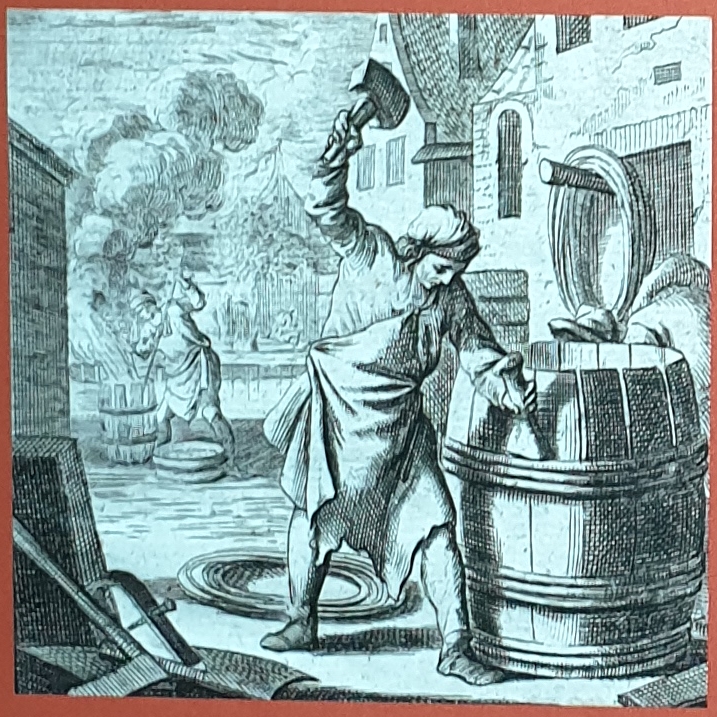
With the establishment of the surname, typical professions from earlier times were preserved. Since industrialization, however, there are no longer many professions. For example “Böttcher” or “Köhler”. Others are still known – although there aren’t many left (e.g. “Schmidt” -> smith). Still others are timeless (e.g. “Koch” -> cook).
“Der Fassbinder” by Christoph Weigel, from 1698
surname
english translation
meaning (of forgotten fob names)
Müller
miller
Schmidt
smith
Schneider
tailor
Bauer
farmer
Fischer
fisherman
Koch
cook
Böttcher, Schäffler, Fassbinder
craftsmen who built barrels
Köhler
craftsman who made charcoal
Vogt, Meier, Schulz, Scholz
administrators, lower officials
examples of surnames that base on job names / occupations
personal look of an ancestor
To describe people, you also describe their bodies. Even if the descendants of these people look very different, these names are very common.
surname
english translation
meaning
Groß, Lang, Lange
great, long
particularly large body size
Klein
small
particularly small body size
Jung
young
Alt
old
one can only guess that the person looked very old
Schwarz, Braun, Krause
dark, brown, frizzy
usually the hair was meant here (very dark, brown or frizzy hair)
Stark
strong
examples of surnames that base on an ancestors look
place of residence of an ancestor
Names that indicate the place where people lived. This was mainly done because the profession of farmer was so common. That is why one has simply given the place of residence for better differentiation of the people. Anyone who lived by a stream (“Bach”) was called “Bachmann”.
surname
english translation
Bedeutung
Berg, Berger
“mountain”
living at the mountain / hill
Stein
“stone”
also living at the mountain / hill /rock “Stein” in a meaning of “rock”
Becker / Bach
“creek”
living at the creek (there ist also “Bäcker” with “ä” . the origin of “Bäcker” is the job “baker”)
examples of surnames that base on the place of residence of an ancestor
Who lives here, lives “at the mountain”. Mountain = Berg. “Mountaineer” = “Berger”
Who lives here, lives “at the creek”. creek = Bach. “creek man” = “Bachmann”
first name of an ancestor
Some first names have also become surnames. Thus the person was named as the son of “…”.
“Behrendt” is e.g. a derivation of the first name “Bernard”. Bernard is actually a first name. (The meaning of the first name is: “Hard / strong as a bear”.)
origin of an ancestor
surname
meaning
Pohlmann
from Poland
Böhm
from Bohemia (now Czech Republic)
Franke
from Franconia
Deutschmann
a german
examples of surnames that base on the origin of an ancestor
Slavic names
Due to the close connection in the East Central European area (especially today’s Poland) there have been many Slavic names for centuries. Approx. 8-9% of the family names in Germany have a Slavic origin. They typically end on -ak, -ow or -ski.
Huguenots were French Protestants who were expelled from France by the Catholics. That was about 300 years ago. You have found a new home in many Protestant areas of Europe, including the Protestant countries of Germany.
Examples: Dumont, Boué, Godeffroy, de Maizière, Sarrazin
Immigration of the past 70 years
Many Turkish names come from immigration in the 20th century. “Yilmaz”, “Öztürk” or “Erdogan”, for example, also appear relatively often in Germany. With around 3 million Turks and Germans of Turkish origin, one can assume around 3 – 3.5% Turkish or Kurdish surnames. There are also notable numbers of Italian, Greek, Spanish and English-American family names.
Special case: noble names
For a long time, the nobility were the secular social leaders in Germany. There were titles of nobility that arose from certain functions, such as “Graf”, “Freiherr” or “Ritter”. The titles were later inherited. The place of origin of the family is usually indicated with the “von” (from) or “zu” (to the). Since the end of the monarchy in Germany in 1919, members of the nobility no longer have any privileges. The nobility titles and names, which previously indicated rank and position, simply became permanent surnames.
Paul “von Hindenburg” Otto “von Bismarck” Ursula “von der Leyen“
But there is one special feature. With the titles of nobility there is the exception that the male and female form may still be used.
That someone has a noble name today only shows something from the history of the family. Legally, someone with a noble name is a perfectly normal citizen.
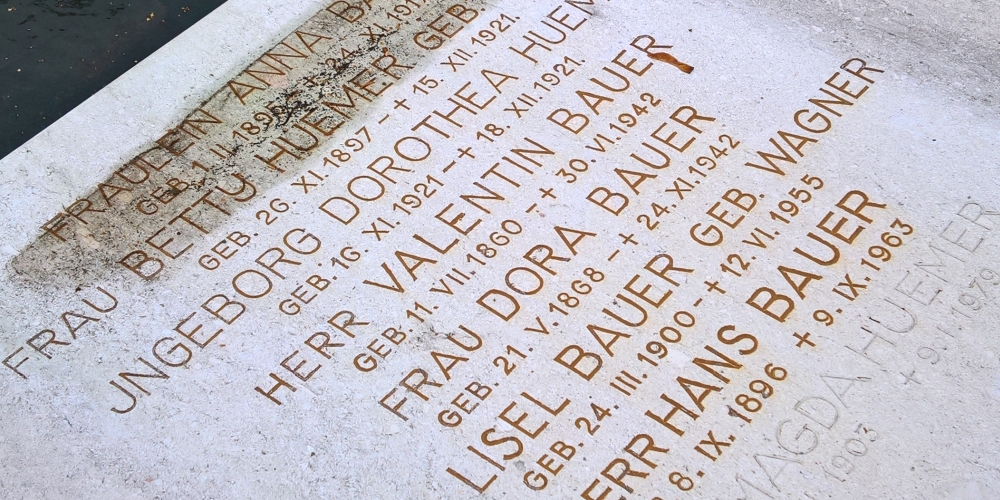
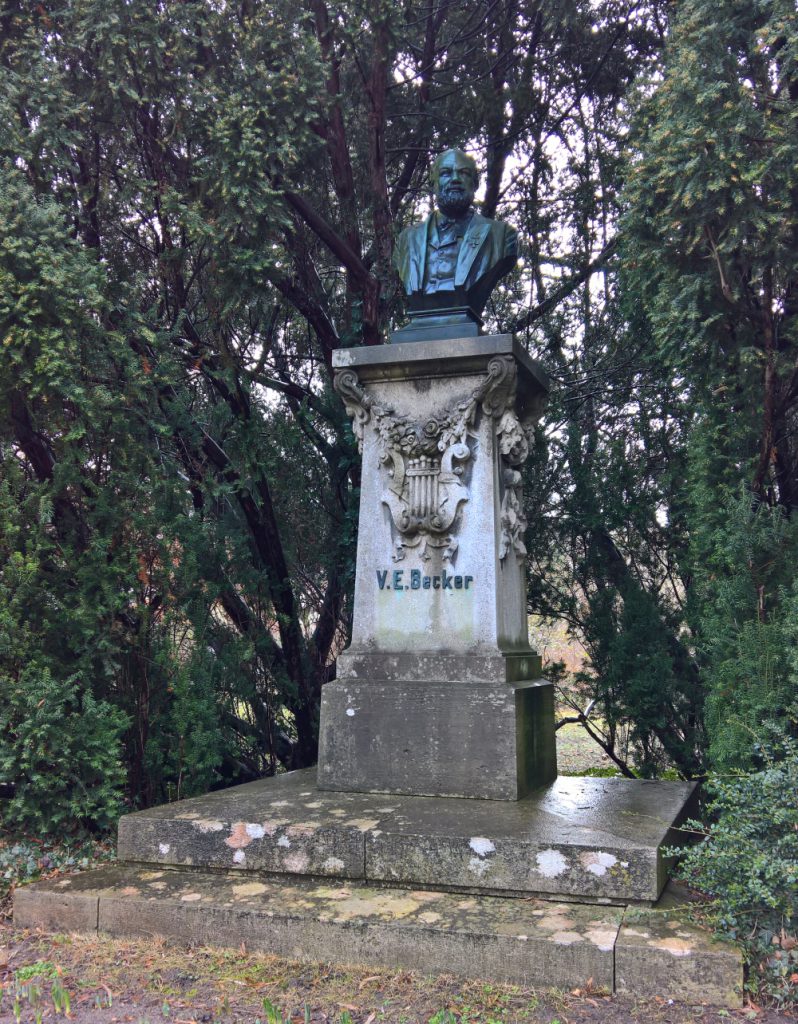
Memorial for Valentin Becker. The reader now knows whats the origin of “Becker”
Rules for family names when getting married
In the case of marriage, the classic case is that the woman takes the man’s last name. This is also the centuries-old tradition that was required by law until the 1960s / 1970s. Today you can choose whether one partner takes the name of the other or whether both keep their own surname. One of the two partners can also have a double name. After a divorce you usually have the right to use your old name again. Own creations, i.e. mixtures of names, are not allowed. For foreigners who live in Germany, the naming rights of their home country can also be used when they marry.
For example, if Martin Müller and Anne Schmidt get married, they have the following options under German law:
Variant (according to commonness)
Names after the wedding
commonness (2016)
1. the woman takes the man’s name
Martin Müller + Anne Müller
74%
2. both keep their names
Martin Müller + Anne Schmidt
12%
3. a spouse (usually the wife) takes a double name
Martin Müller + Anne Schmidt-Müller oder Martin Schmidt-Müller + Anne Schmidt
8%
4. the man takes the woman’s name
Martin Schmidt + Anne Schmidt
6%
Incidentally, triple names are not possible! The Federal Constitutional Court decided on May 5, 2009. So you cannot “collect names” through several marriages and be called e.g. “Schmidt-Müller-Stein”.
Example of a well-known person Angela Kasner was born in 1954. In 1974 she married Ulrich Merkel. She changed her name to Angela Merkel. They divorced in 1981, but Angela Merkel kept the assumed married name. In 1998 she married Joachim Sauer. But they both kept their respective names and are now the couple Angela Merkel and Joachim Sauer.
Historical development of married name law (for particularly interested readers)
At the end of the 19th century, in the German Empire in 1875, civil marriage was introduced. Since then one can speak of general rules throughout Germany. With the BGB of 1896 it was regulated by law that (according to tradition) the name of the man automatically becomes the family name at the time of marriage.
There was a change to this in 1966 in East Germany (GDR) and from 1976 also in West Germany (FRG): Either the name of the man or the woman was determined to be the family name that the children also receive. If desired, one of the two spouses could combine his previous married name with the new married name. Double name, e.g. Schmidt-Müller. It was not possible for both of them to keep their names. It should be noted that the laws in the two German states were changed with a difference of 10 years. Socialist East Germany was faster than liberal West Germany in terms of women’s equality.
In 1991 it was decided in reunified Germany that both could keep their own names. It was also possible to have a double name for both people. As early as 1993, however, the option of using common double names for married couples and children was withdrawn. The current rules have been in effect since 1993.
Passing on family names to children
If the parents are married: A family name can be determined in a marriage. The children also receive this. If there is no pre-determined family name, one of the parents’ names is chosen.
If the parents are not married: For children who are not born in a marriage, the children are usually given the mother’s name. However, the child can also take on the father’s name if both parents have custody.
A double name cannot be passed on to the children. That was only possible from 1991 to 1993. Lena Meyer-Landrut, who won the Eurovision Song Contest 2010 for Germany, is one of these exceptions, she was born in 1991 and has the double name of her father.
Anne and Martin have a daughter, Leonie. Depending on the name of the parents, there are the following options for Leonie’s last name:
parents names
name of daughter
Anne Schmidt, Martin Schmidt
Leonie Schmidt
Anne Schmidt, Martin Schmidt-Müller
Leonie Schmidt
Anne Schmidt, Martin Müller (regardless if married or not)
Leonie Schmidt or Leonie Müller
Mr. Schmidt did not choose the profession of his medieval ancestor. He didn’t became a smith, but a butcher.
After writing about the Christmas season in another post, I would like to write about the festival itself. About what is closely related to time, Christmas Eve, the Christmas holidays and the time after Christmas.
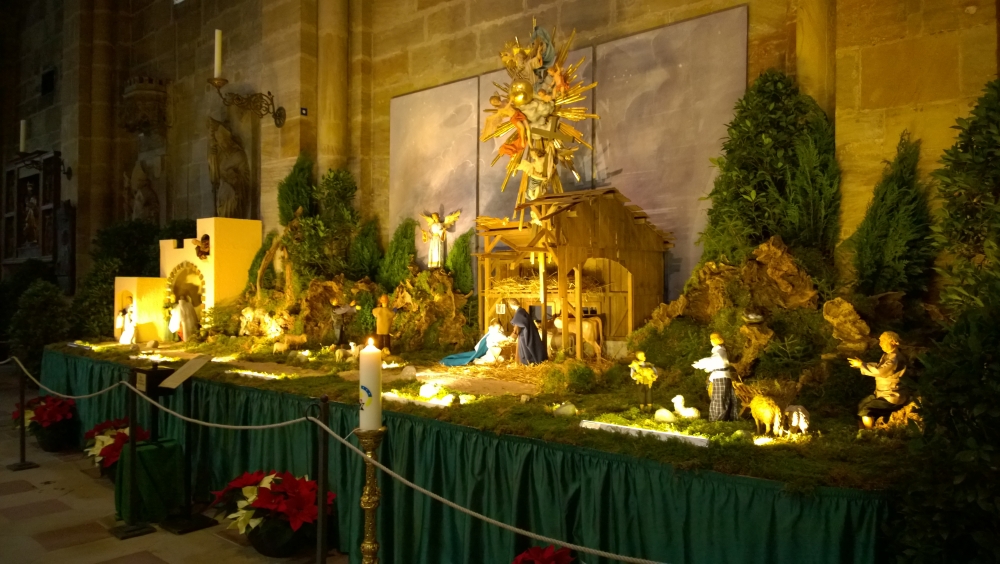
Nativity scenes and nativity plays: Of course part of Christmas is the biblical Christmas story . Mainly in the churches “cribs” are set up. These are a model representation of the stable scene in the Christmas story. In addition in some places a play is practiced and performed by the children of the parishes.
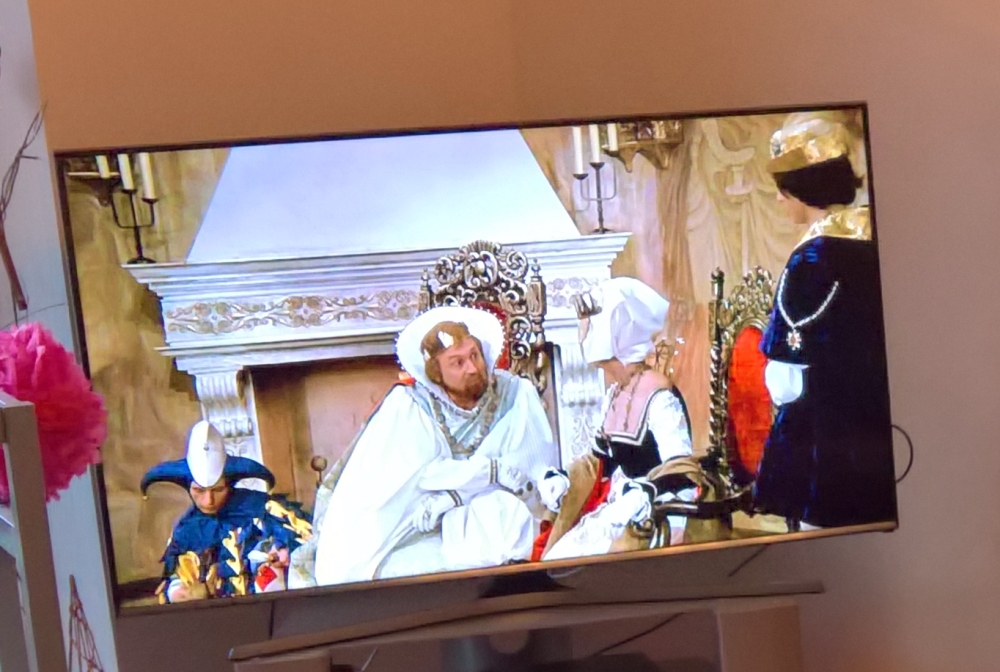
The Christmas season is also time of stories and classic films. On television, many fairy tales are shown. There are classics that have been shown again and again for many years: For example, “3 Haselnüsse für Aschenbrödel” (3 hazelnuts for Cinderella), the Swedish “Michel from Lönneberga” stories of Astrid Lindgren or “Der kleine Lord” (Little Lord Fauntleroy).
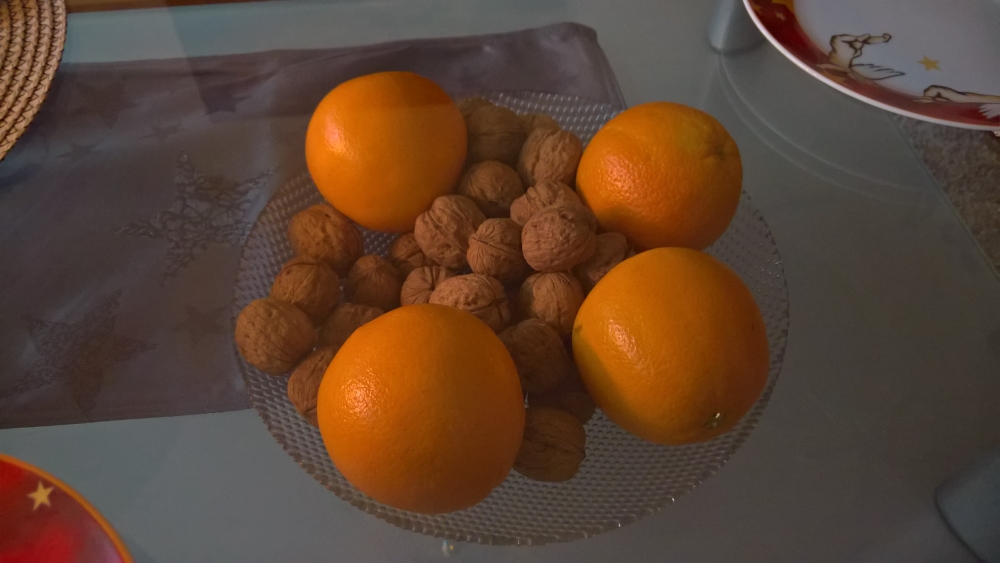
At Christmas time you can often see oranges / tangerines, apples and nuts. Background: In the past, these things were not available year round. Apples mature in the fall and are therefore abundant at this time. Nuts are also easy to store and provide plenty of energy in the cold winter. Oranges and tangerines are ready for Christmas (in Southern Europe), so they will be given away for Christmas.
an well-known fairy tale… | Photo: Robert Behrendt
nuts and oranges | Photo: Robert Behrendt
crib, Bamberg Dom | Photo: Robert Behrendt
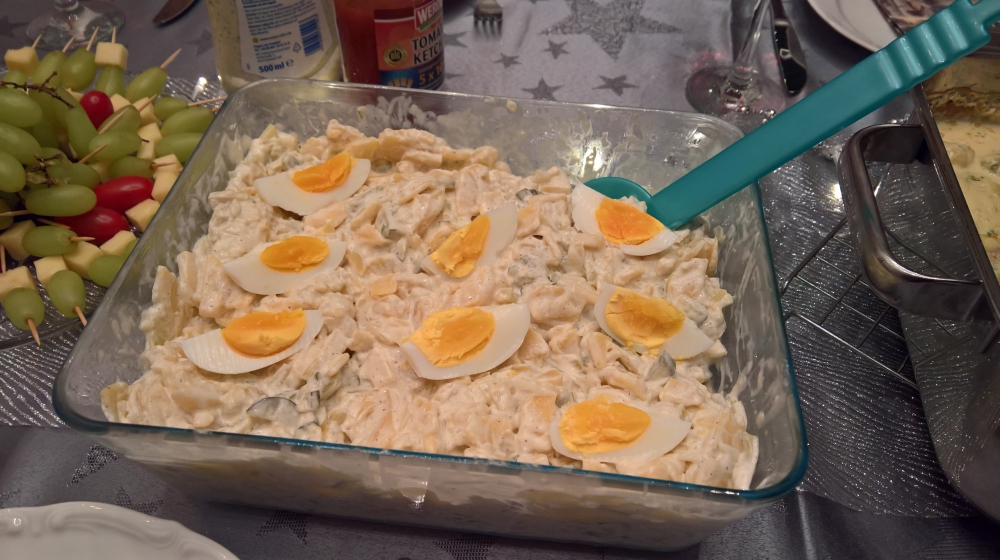
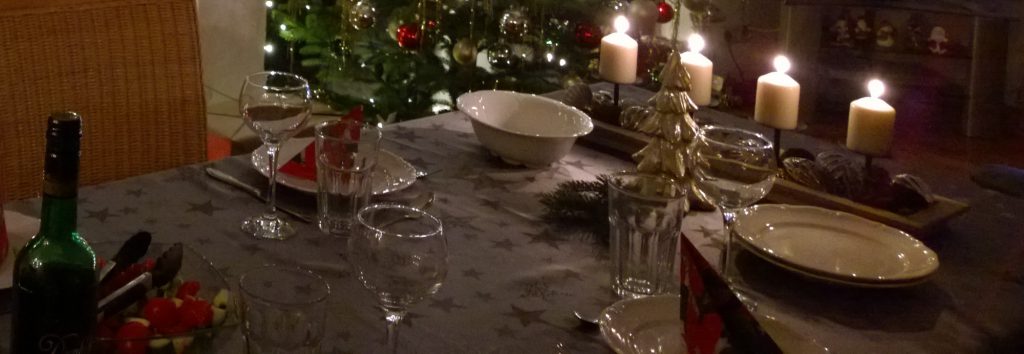
Christmas Eve (Heiligabend), as well as the first and second Christmas Day is designed differently depending on the family tradition. December 24 is not a public holiday. The shops are usually open only until noon. Many people use this as a last resort for shopping. That’s why you should organize the things you need for the festival in advance. During the day the last preparations are made. Traditionally, the Christmas tree is also set up and decorated on this day. The food is prepared and relatives travel to their visits. Believers attend the services. For many people it is one of the few church visits in the year. The evening is usually designed as a quiet celebration in the family. In some families, singing songs or playing instruments is customary. But for those who don*t do it theirself there are concerts, shows, fairy tales etc in TV. Board and card games are also popular. There is definitely delicious food. On Christmas Eve, however, there is the custom of eating sausages with potato salad. This is a simple meal, as a contrast to the elaborate dishes in the next two days. The gifts will be distributed at the “Bescherung”. If there are children in the family, then a Santa Claus is engaged, who presents the gifts. But that’s not easy! Be prepared to recite a poem or sing a song to get the gift. Depending on the region the “Christkind” (Christ Child) brings the presents. This is of course not to be seen, so the children can be surprised by the fact that the gifts are suddenly there. Even if no special Santa Claus comes, then usually someone who will distribute the gifts – including fun factor. Big or small gifts, bought or homemade. Everything is possible what you can imagine. The most important thing is that you spend a nice evening in the family.
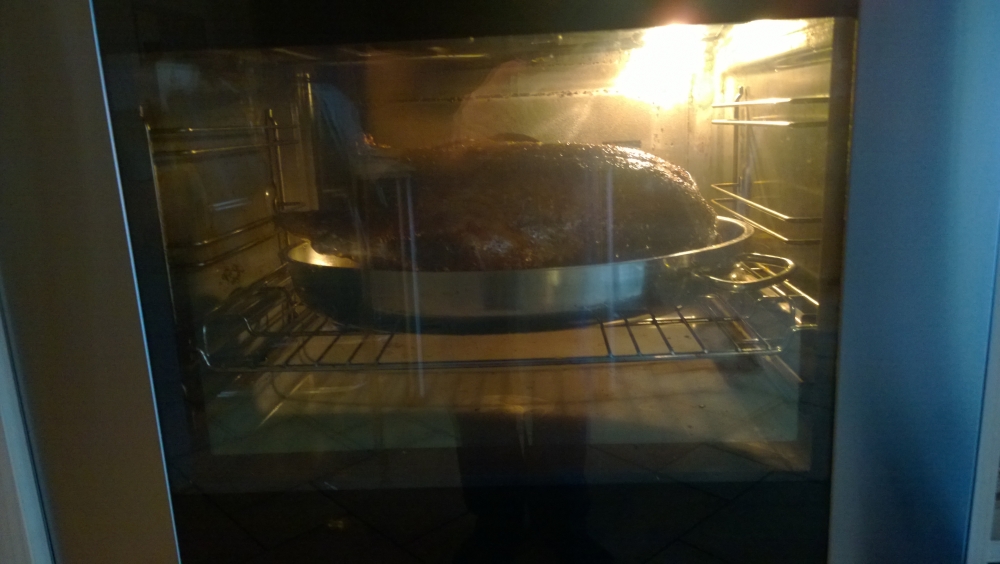
duck in oven | Photo: Robert Behrendt
north german style potatoe salad (Kartoffelsalat) | Photo: Robert Behrendt
Photo: Robert Behrendt
Appearance of Santa Claus: Has developed from “Nikolaus” (St. Nicholas). The look of Santa Claus was very various until the 30s. There were different ones. often inspired by the bishop-origin. Coca Cola in the US did not invent Santa Claus, but he has made the red-and-white style popular worldwide and unified it! It was used for an advertising campaign, with red and white chosen from their own colors. The Christ Child: Martin Luther, as a reformer of the church, rejected the worship of saints (Catholicism) and sought a replacement for Nicholas, who was a bishop and was canonized.
The first and second Christmas day will also be used for visits. And of course, to try the gifts 🙂 In these days meals are very well. Very typical are goose or duck with red cabbage and dumplings. Often one uses the time for visits with relatives. Ironically, Christmas is always associated with family quarrels. Especially when meeting relatives who do not really like each other. And of course you can not force harmony and contemplation … When the party is over and you do not see it for a long time, everything is fine again. See you next Christmas … To find out what the Germans really do on 25 and 26 December, you have to ask them. That is different according to taste. One can of course assume that there are people who do not join in all this bustle. These Christmas muffle are looking for these days occupations that have nothing to do with Christmas. Or they go on vacation at the time!
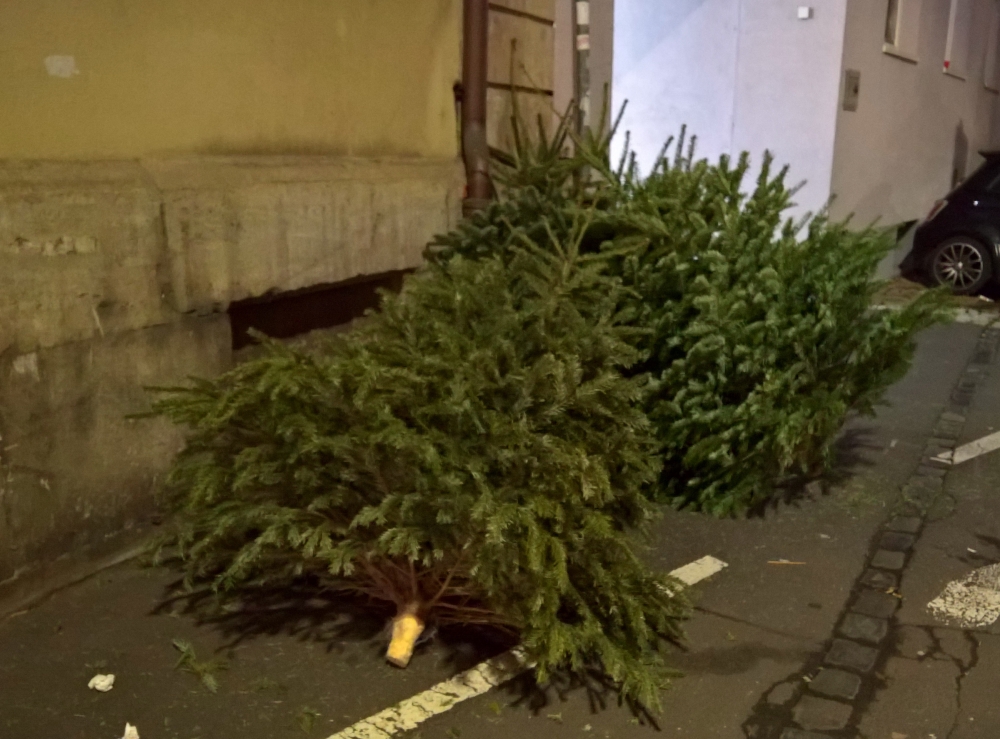
The time between Christmas and New Year’s Eve is also called the “Zeit zwischen den Jahren” (“time between the years”). Many people take a vacation. Some companies do not work or almost do not work at all., But with New Year’s Eve the quiet time ends . Traditionally, the Christmas tree and all other decorations will be dismantled on January 6th. The decoration will be stored and is waiting for the next Christmas. In Germany, of course, its regulated how the Christmas trees are disposed of! Either there is a special date, at which the city cleaning makes an extra Christmas tree tour to collect everything. Or (usually in smaller places) there is a small cozy party, the “Christmas tree burning”, in which usually the local fire department burns all the Christmas trees of the place in a big fire.
Christmas trees, ready to be picked up! | Photo: Robert Behrendt
January 6 is the day of the Magi (“Heilige 3 Könige” / holy three kings). This is especially important in Catholic regions. In some states it is also a public holiday. There is the tradition of the “Sternsinger” (“star singers”). Thereby children draw as holy 3 kings dressed in the houses, sing and collect donations for the poor, etc. In large places you have to order them. As a conclusion you get a blessing at the front door. It is the last part of all Christmas dates. This will be the end of the year.
Christmas is a Christian festival enriched by geography and history. Winter solstice is the highlight of the cold, dark winter and the end of the year. Germany is Christian in its history, and Christians celebrate the birth of Jesus Christ at this time. This festival has become an integral part of the culture. The religious aspect is still noticeable, but is now only one part. Most of the things I’ve described here are beautiful traditions and customs even without the religious occasion. Regardless of origin, people without faith or other religions also more or less commit to traditions. It is the time of light in the dark, the review of the old year and a look into the new year. It’s holidays for the family, contemplation, peace … So it’s something that is important to all people.
I would like to give an overview of the Christmas season and Christmas itself with some of its customs. I can only show a section, because there are many regional features of which I don’t know myself. Each family also has its own traditions and procedures. In addition, I am not a Christian, so Christmas for me has less to do with religion, but more with family and rest in the middle of winter.
Christmas, the Christian festival celebrating the birth of Jesus Christ, is more precisely the 24th of December (Christmas Eve / Heiligabend) and the 25th and 26th of December (1st and 2nd Christmas Day / 1. und 2. Weihnachtsfeiertag). The weeks before are called pre-Christmas time.
This Christmas season (Weihnachtszeit) really starts with the first Advent. The 1st to 4th Advent, these are the 4 Sundays before Christmas. There is the custom to set up an Advent wreath. Traditionally it consists of fir green, on which there are 4 candles. Each Advent Sunday, another candle is lit. Fir green, like the Christmas tree, are classic decoration. They symbolize as evergreen plants (also over winter time) the nature / the life / the spring after which the people long back. Of course, the advent calendar with its 24 doors must not be missing. The classic version of our time is filled with small chocolate figures. But nowadays, everything can be in there. Cosmetics, literature texts, tea or sex toys for adults. You can also make a calendar from a box of beer. The imagination knows no limits. The basic idea is 24 little surprises every day from December 1st to 24th to make waiting easier. Although impatient and addicted to chocolate open all 24 doors at once to eat the chocolate.
Decorations
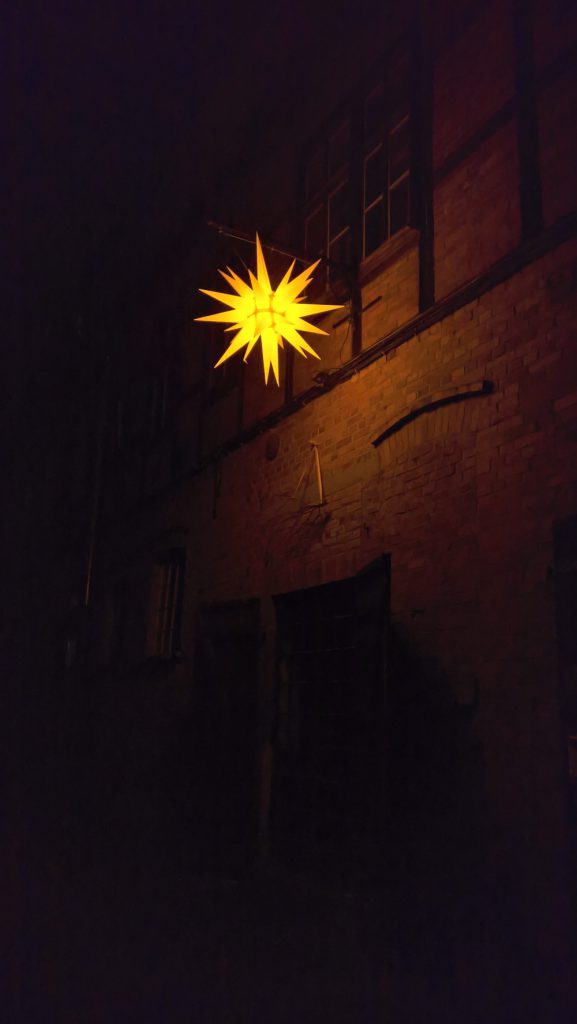
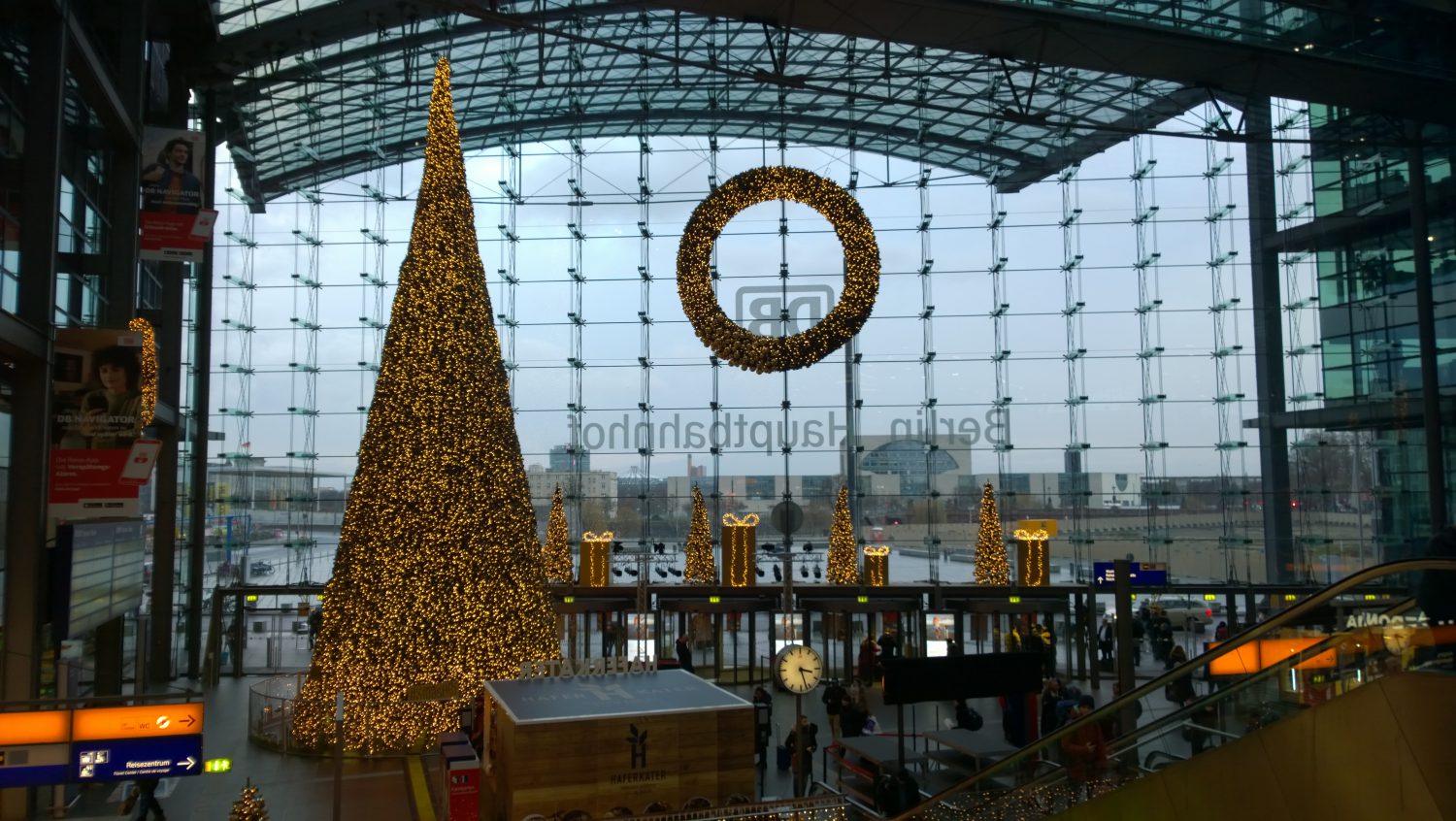
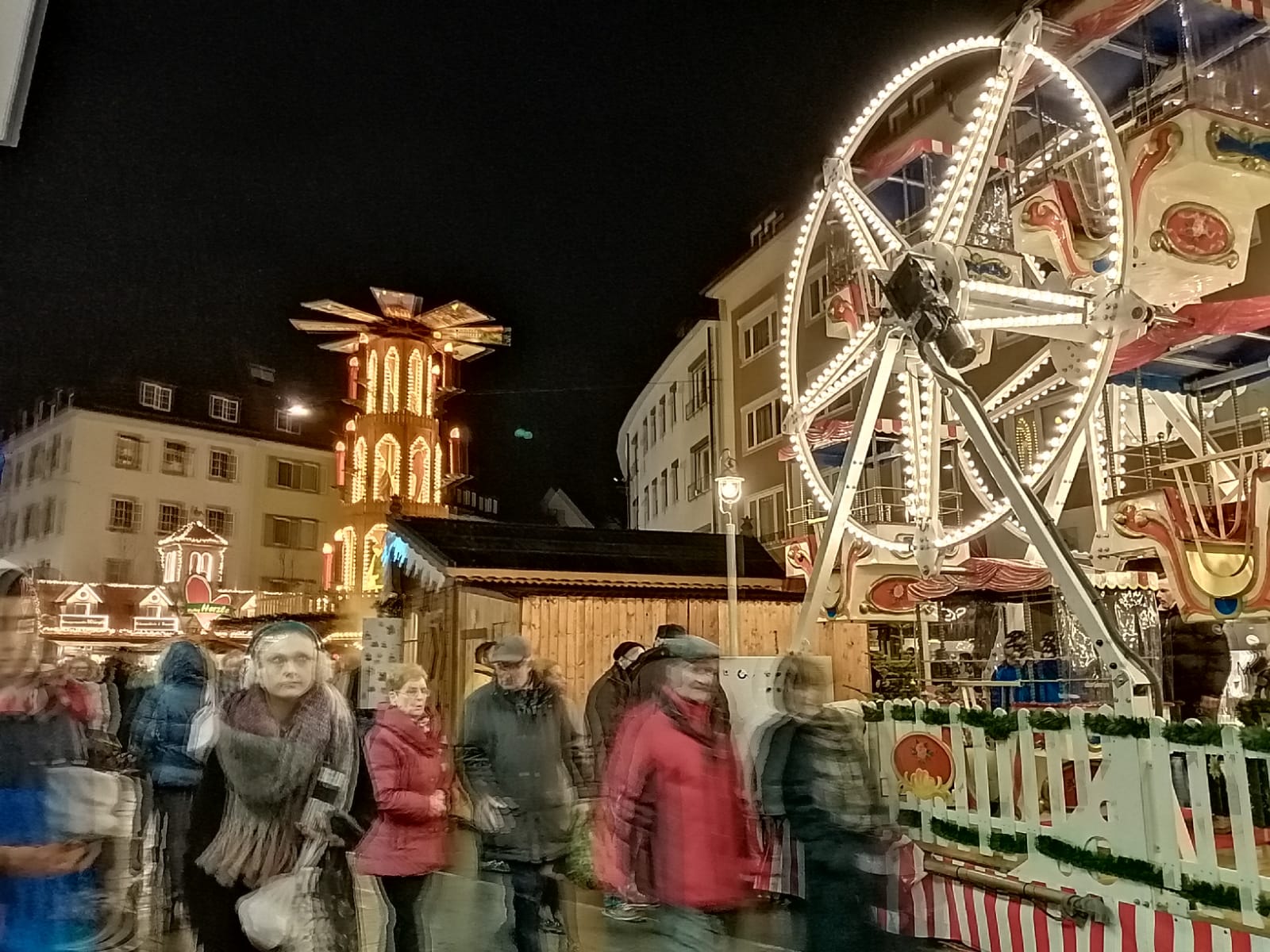
The Christmas decoration (Weihnachtsdekoration) will be set up on the first weekend of Advent and will last until the 6th of January.Examples of typical Christmas decorations are: the candle arch, the smoking man, the gingerbread house, the nutcracker and the Christmas pyramid. Fairy lights in all possible forms are also part of the Christmas decoration. Also shops in the city and many companies decorate at Christmas time. However, excited flashing and color-changing lights spring rather Asian taste, so as most of the lights decoration is made. The nicer decoration is calm and stylish.
Christmas decoration in Berlin main station, picture: Robert Behrendt
St. Nicholas
December 6 is St. Nicholas Day (Nikolaus). In Germany there is already a foretaste of Christmas on this day by giving small gifts. There is the following custom: the children clean their shoes or boots and put them outside the door overnight. The next morning, the shoes are filled with small gifts: But only if they are well cleaned, because diligence is rewarded! Who does not clean his shoes properly gets nothing. In addition to shoes, in some places plates are set up overnight. Nowadays children almost always get something, even if they were not good. It has developed to the fact that there is a Nicholas in kindergartens, elementary schools or similar places a Nicholas who brings small gifts. It’s because at Christmas, the people won’t meet. In early times, Nicholas brought the actual gifts on December 6th. However, the messing (Bescherung) has wandered into Christmas in Germany as well as in other countries. Then Santa Claus or the Christ Child (depending on the region) brings the presents. In English-speaking countries, the gift-bearer is also called Santa Claus and comes for Christmas. Not only the name, but also the secret delivery of presents at night corresponds to the German tradition. It is not boots or plates, but stockings in which the gifts are placed. The idea is the same – only the appointment is different.
obligatory things…
Christmas parties (Weihnachtsfeiern) are among the obligatory things in clubs, businesses and other organizations and groups to have a Christmas party. The occasion and thought is the same, it is also a joint meeting at the end of the year. Otherwise, they can have very different moods. It can be a cozy coffee-drinking in the old people’s home or a common restaurant visit of a company or department. Or a big party of the company or association. Especially with companies, this is one of the few occasions when you organize a party with all your colleagues. It is usually funny to “extremely funny” ;).
In the pre-Christmas period, one often speaks of “Weihnachtsstress” (english: “Christmas stress”). This arises through the preparation of the festival. Especially by getting gifts or organizing trips or Christmas dinner.
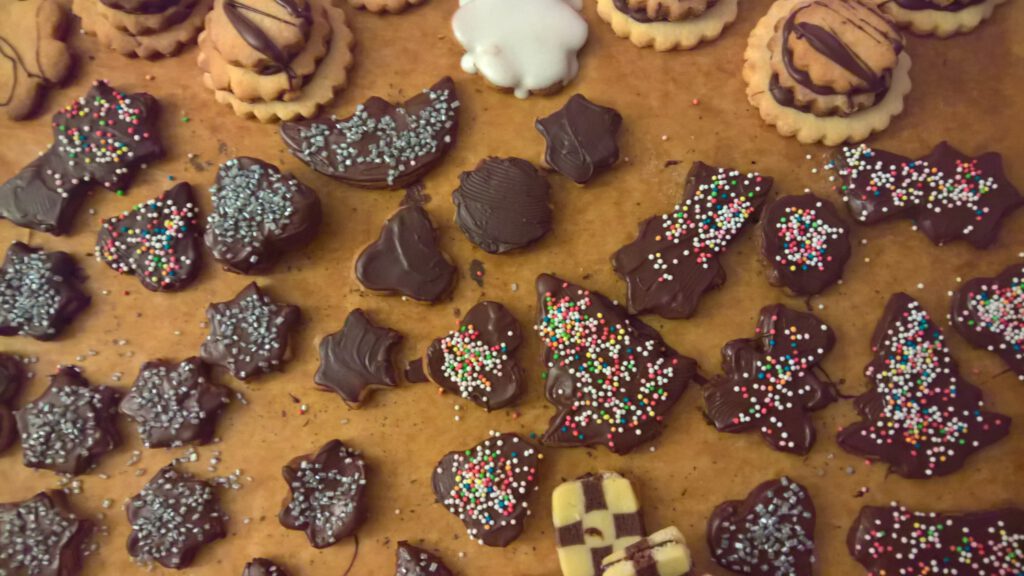
For Christmas cookies (Weihnachtsgebäck) only the following: There are many different varieties, sometimes known only regionally. Everywhere but are known cookies (german special name: Plätzchen), Stollen, gingerbread (Lebkuchen), cinnamon stars (Zimtsterne), specula (Spekulatius) …In the shops, Christmas cookies are usually offered at the end of October. The early date has nothing to do with tradition, but with sales. Home-made, it tastes almost always better. Especially nice is the Plätzchen-cookie baking at home.
Plätzchen | Photo: RB
Christmas Markets
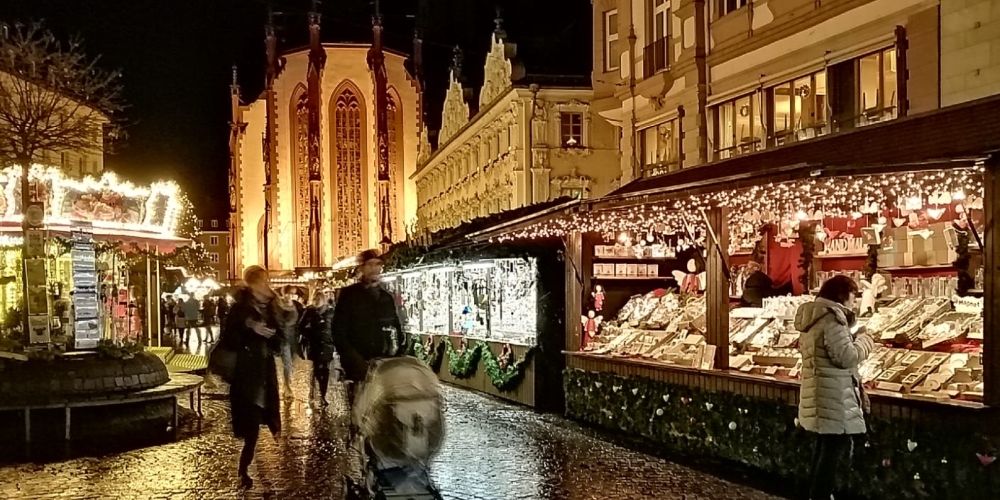
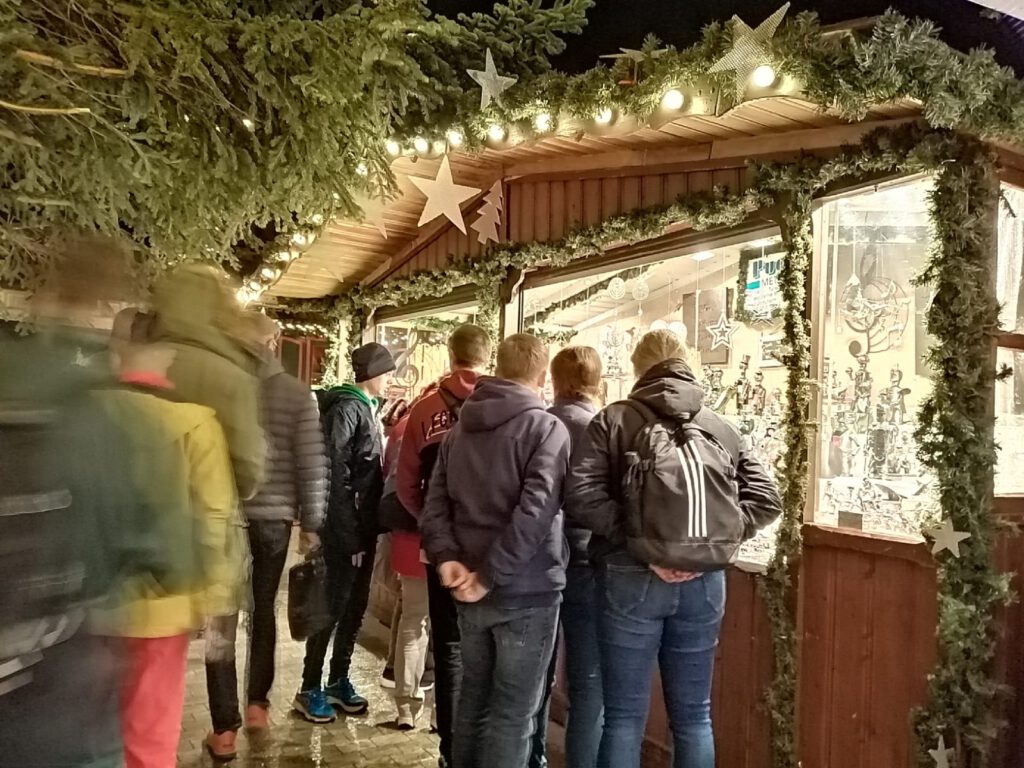
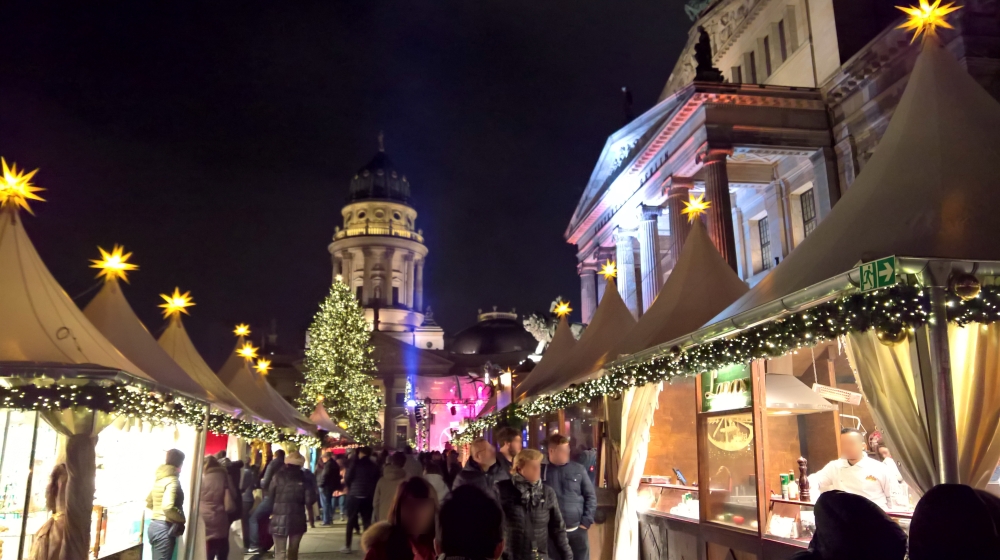
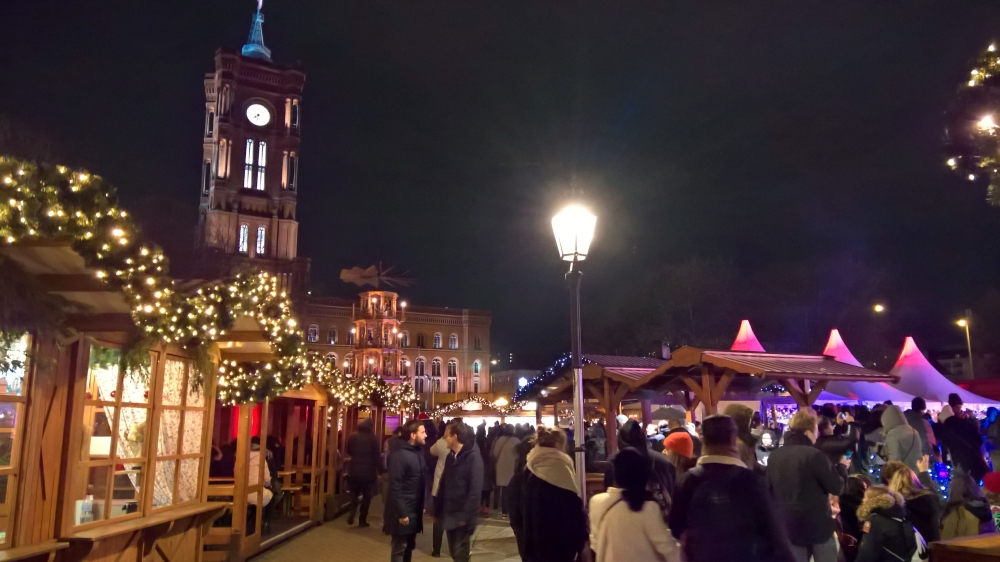
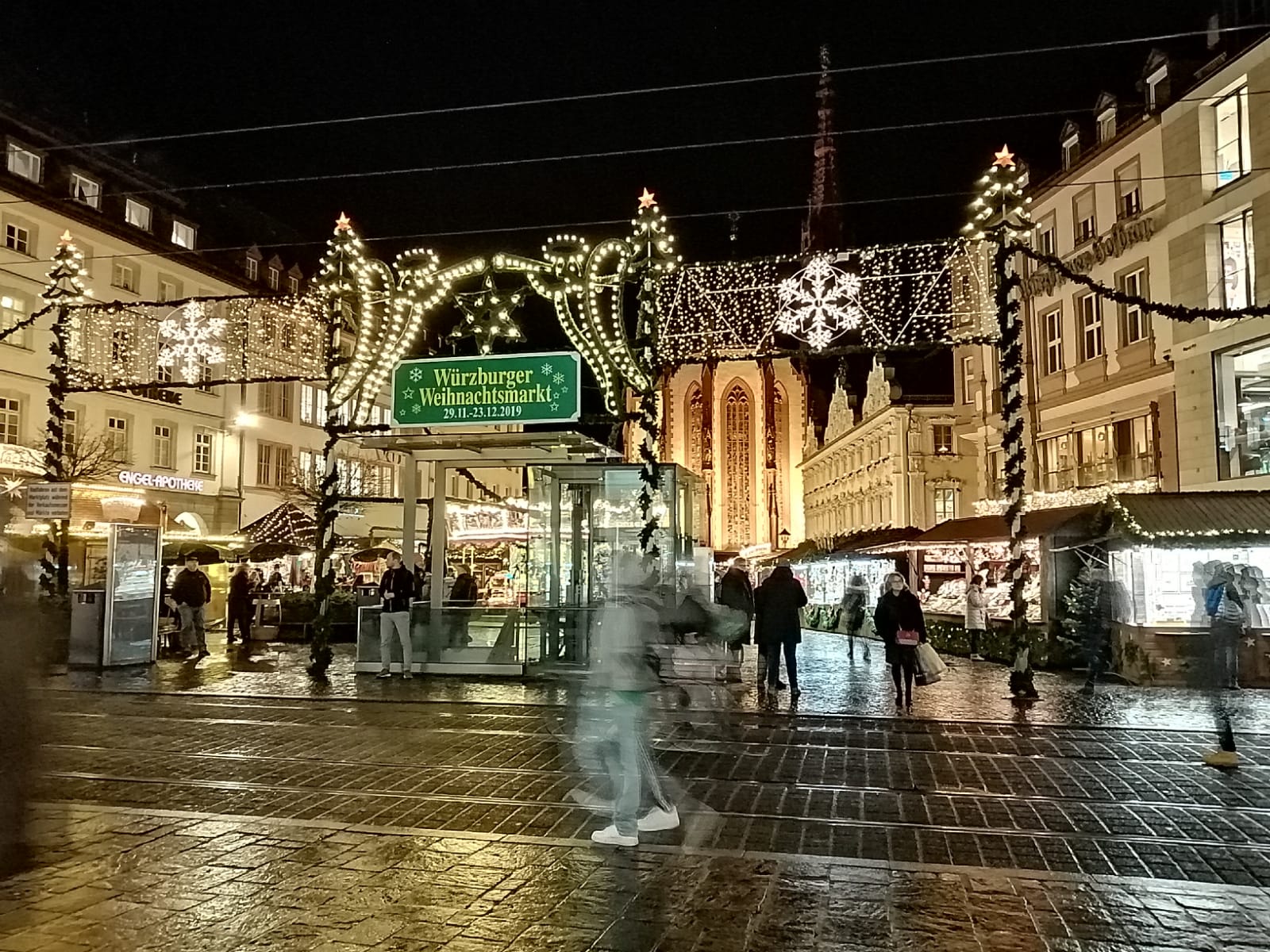
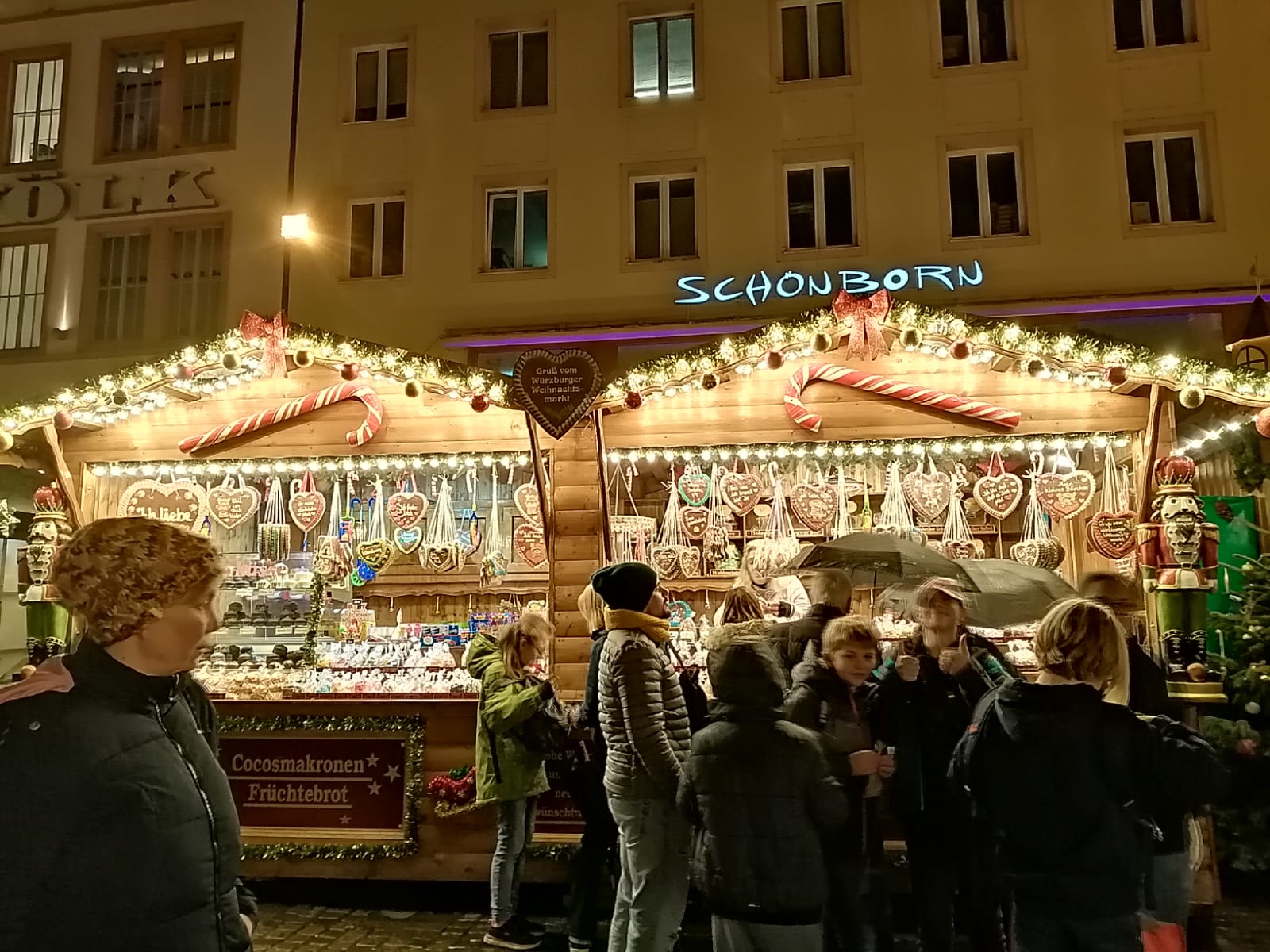
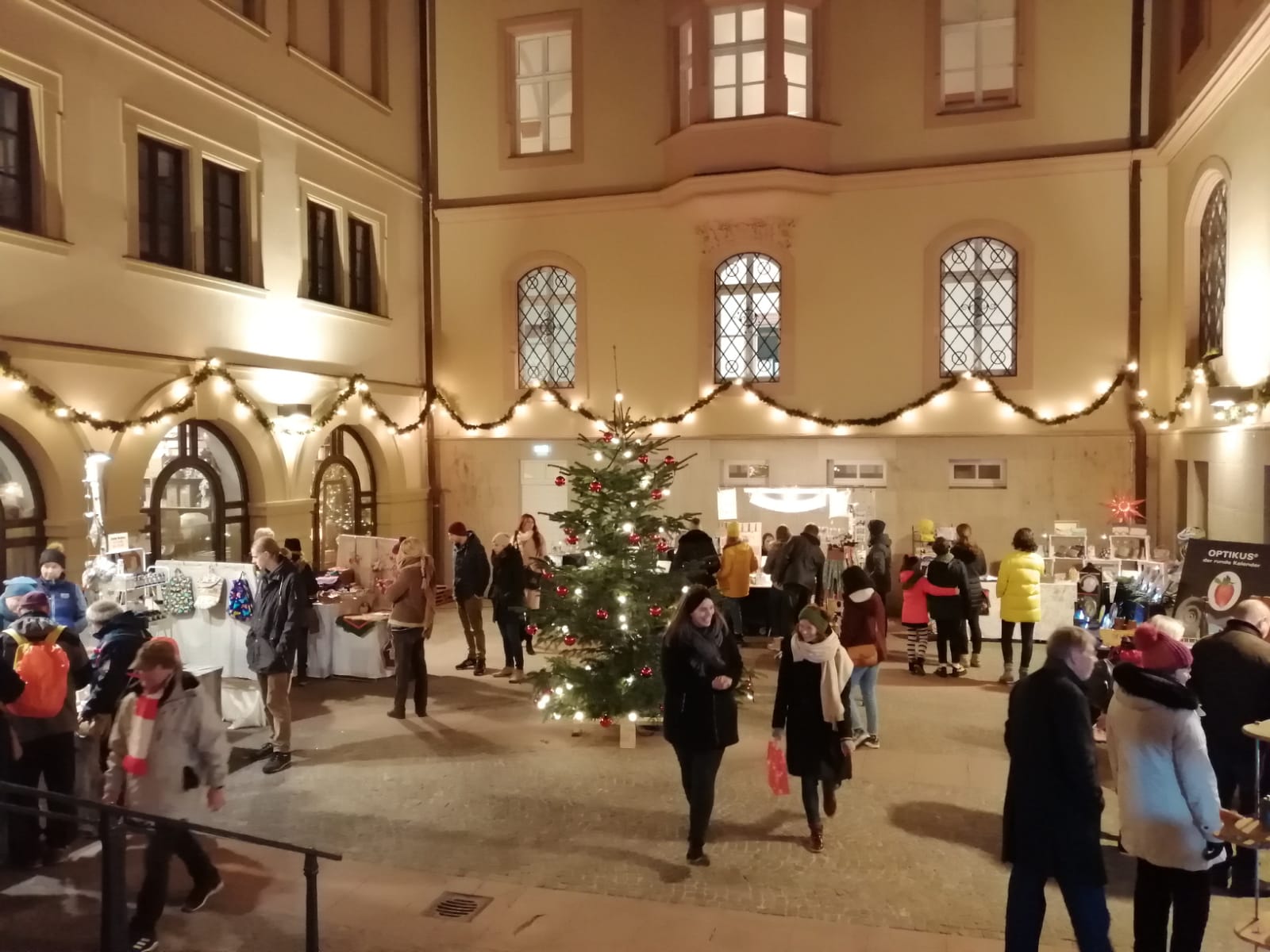
Christmas markets are mainly in German-speaking countries, Germany, Austria, Switzerland. They take place during the pre-Christmas period, ie the end of November to the end of December. Traditionally, they are already finished before the actual Christmas days. Most of the time they close for 22/23. December. You visit them with family or friends. In festively decorated stalls you can find delicious food as snacks, you drink hot drinks and can look around for small gifts. Normally you are not outside for a long time at this time of the year – but in this occasion its comfortable in cold temperatures. You will find a quiet, pleasant atmosphere that you can just enjoy.
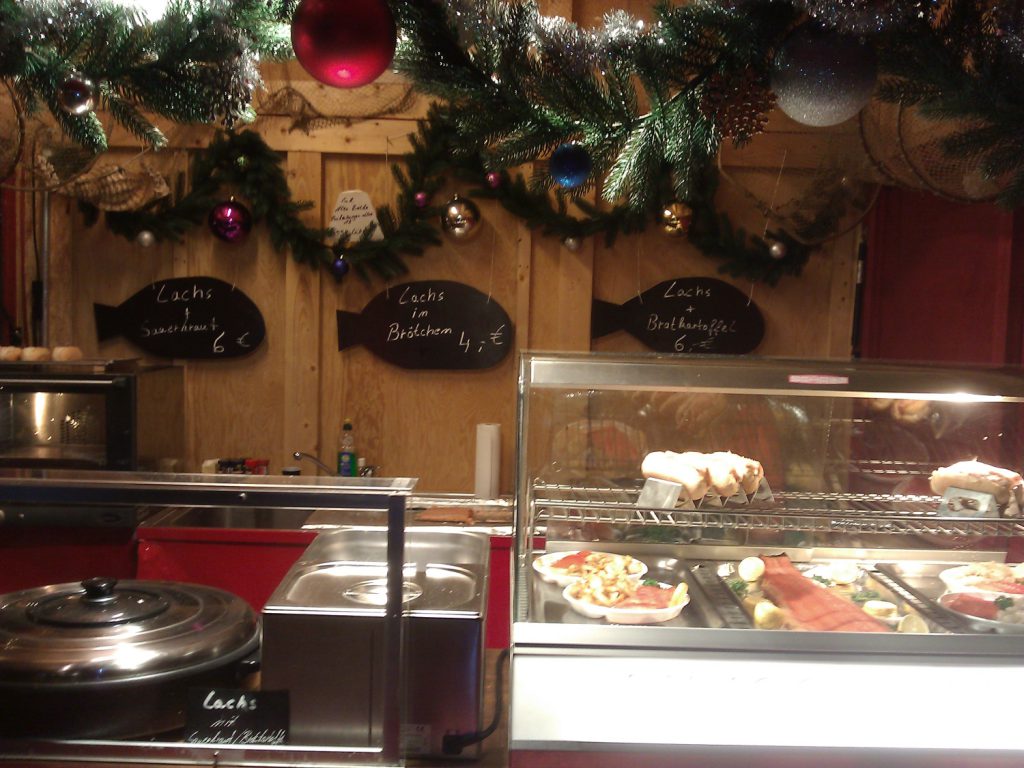
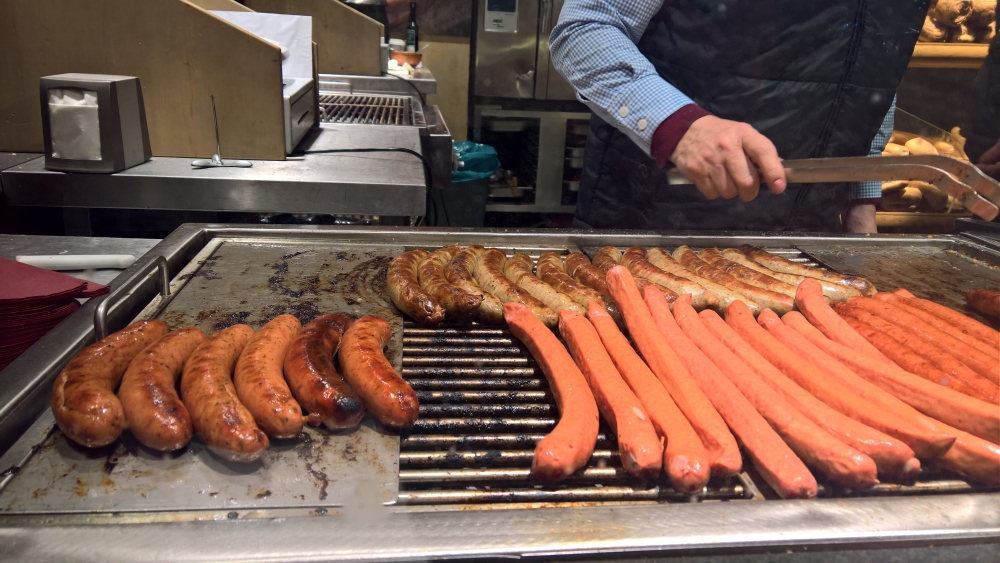
Depending on the size of the city there are bigger and smaller Christmas markets. Very large cities often have several ones in different parts of the city. The smaller markets in small towns usually do not last long. They often take place only a few days or a weekend instead. But they are often more comfortable and organized by the local residents. There are lots of little things to eat. The classics are bratwurst, roasted almonds, waffles and hot chestnuts. Usually you drink mulled wine. This is hot wine with spices and sugar (cinnamon, cloves, lemon, etc). Usually it is red wine, but there are also white mulled wine. Who ordered “Mit Schuss” (“with a shot”) receives some rum or Amaretto in the mulled wine. If you like it without alcohol, you can drink a punch or a fruit punch (“Früchtepunsch”). It’s also common to warm your hands on the hot glasses.
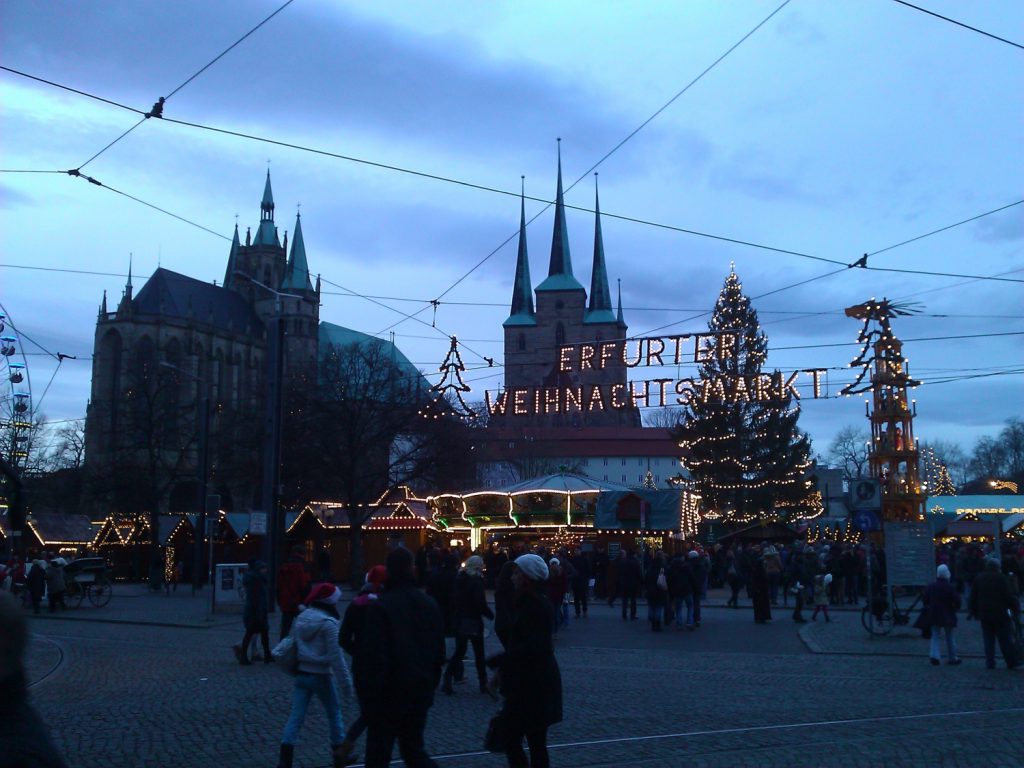
Weihnachtsmarkt Erfurt
Im Rostocker Weihnachtsmarkt
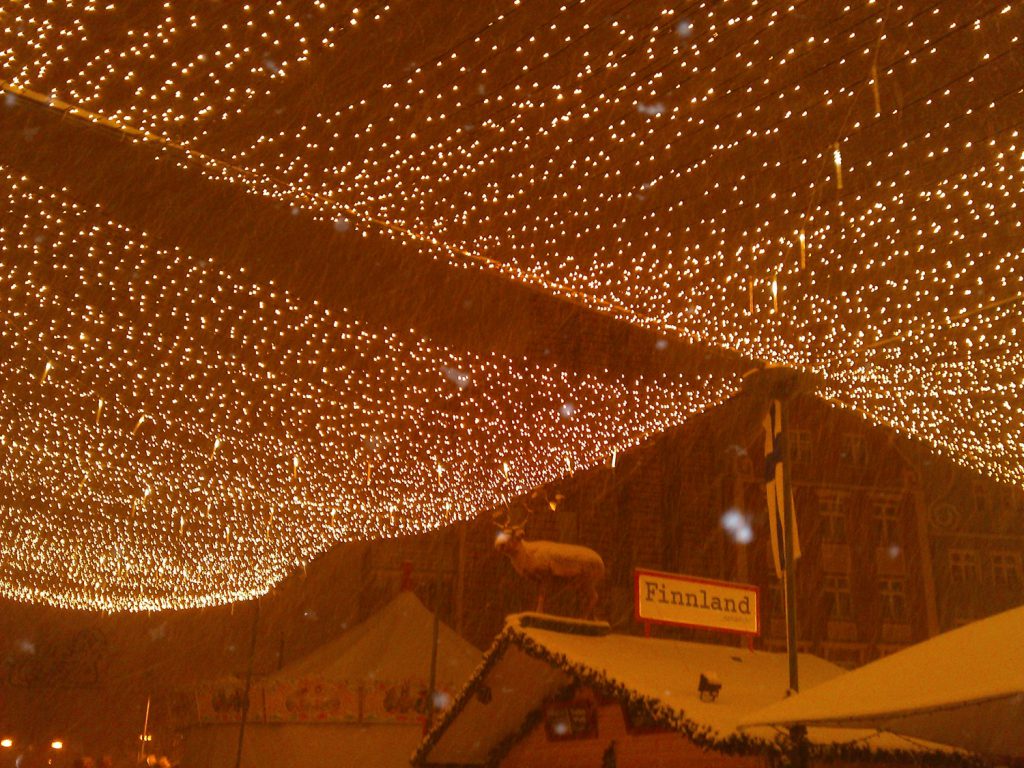
Finnland-Stand Weihnachtsmarkt Rostock
Berlin, Gendarmenmarkt
Berlin Alexanderplatz
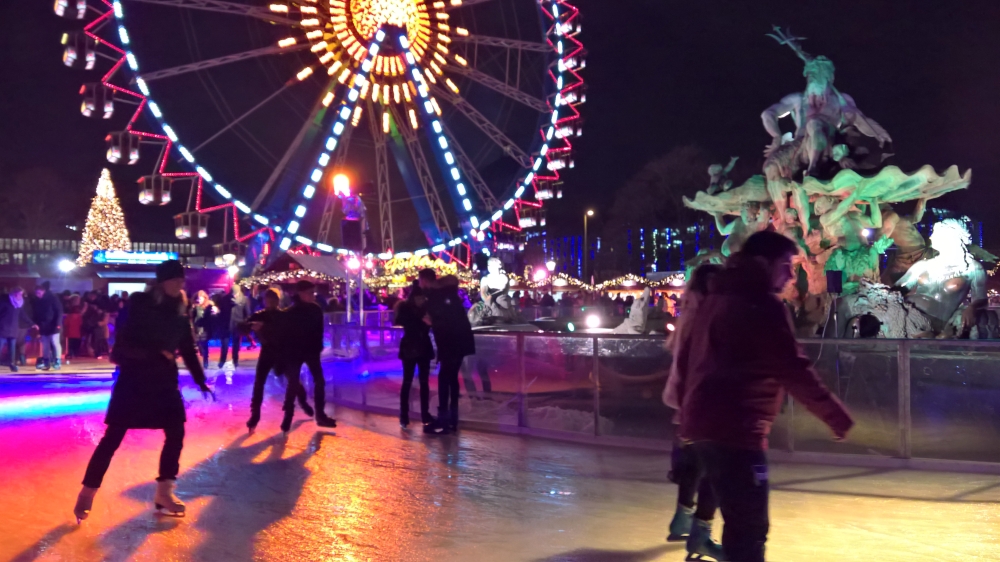
Berlin Alexanderplatz, Eislaufbahn
Weihnachtsmarkt Rothenburg
Bratwurst in Würzburg
Würzburg
Fotos: Robert Behrendt
You can also buy presents and decorations at the Christmas markets. It is of course very nice when they sell hand-crafted things. These are often available on special smaller markets. Of course, there are always differences and special orientations. For example, medieval markets where you can drink warm mead. There are also markets with many rides and annoying music. Traditional markets can be recognized by the fact that no music or only live music is played. Christmas markets often have proper names such as the “Dresdener Striezlmarkt” or the “Nuremberg Christkindlsmarkt”. For a visit I personally recommend the Christmas market in Erfurt.
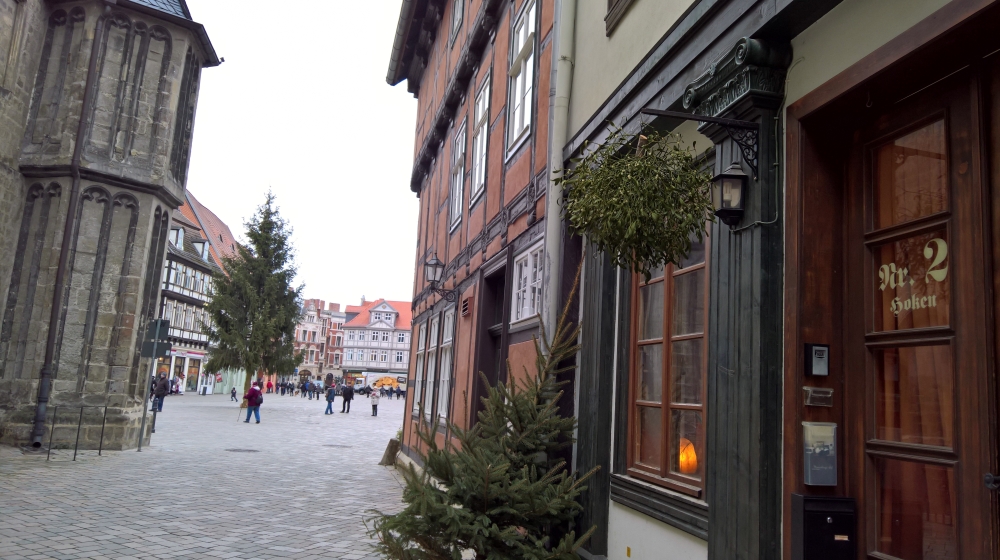
The Christmas season in December is the time in which the days are shorter and therefore there is little daylight. The shortest day is the day of the winter solstice on 21th or 22th of December. On this minimal short day pass from sunrise (about 8:15 clock) to sunset (about 16:15 clock) only 8 hours. Therefore, the decoration with light is especially common. You have been longing for the light of the sun for a long time now. With Christendom, Jesus Christ was added as “light in the dark world”. It is also the time when all the leaves of the deciduous trees have fallen off. It is (normally) cold and it can snow. In this situation, conifers have a special meaning. They are evergreen plants and the only trees that remain green even in winter. They have therefore become a symbol of life and a return of spring. Branches of coniferous trees such as fir trees have become a classic decoration. The same goes for mistletoes.
So also the Christmas tree in Central Europe, in Germany, has become part of Christmas. In some parts of Germany it is also called “Christbaum” instead of “Weihnachtsbaum”. Things are hanged on for decoration. In ancient times, food was hung on him. How it is decorated is left to the imagination, taste and style. The important thing is that he has a tip! Precisely because ecological thinking is widespread in Germany, a real tree is preferred. Real trees are authentic, plastic trees are sometimes practical, but definitely not nice! In public places it belongs to the normal Christmas decoration and stands during the entire Advent season. In private, in the family, he is traditionally set up and decorated privately on Christmas Eve or the days before. It was bought fresh a few days earlier, in DIY stores, supermarkets, on Christmas markets or directly on the Christmas tree plantation.
conifers and mistletoes in Quedlinburg | Photo: RB
Special thanks to Gayane Karapetyan for the Photos (inclusive featured image)