Author: Robert

  • Carnival (Karneval / Fasching / Fastnacht)

    Carnival (Karneval / Fasching / Fastnacht)

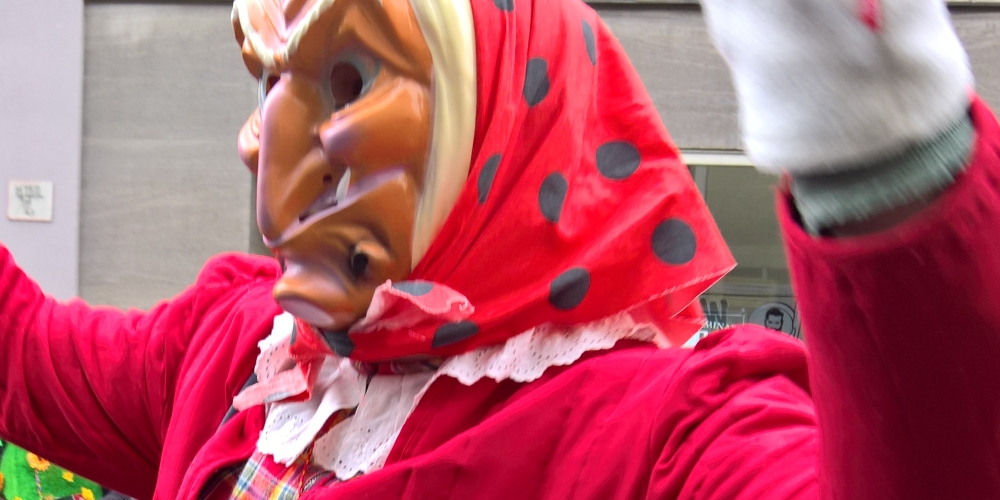
    Carnival: Karneval, Fasching, Fastnacht… As so often in Germany there are different names for one and the same thing depending on the region. In Germany it is often described as this: controlled excess!

    terms

    Mainly these 3 names are used:
    (Der) Karneval -> that comes from the Latin, either “carne levare” (take away meat) or “carne vale” (meat, farewell!)
    (Die) Fastnacht -> “die Fastenzeit naht” (Lent is approaching) oder “die (letzte) Nacht vor dem Fasten” (the (last) night before Lent)
    (Der) Fasching -> from the medieval “Fastenschank” (serving of drinks), the last serving of alcoholic drinks before Lent

    For me personally it is Fasching! But I will use “Karneval” here because it is used nationally in Germany and is also close to the English “carnival”.
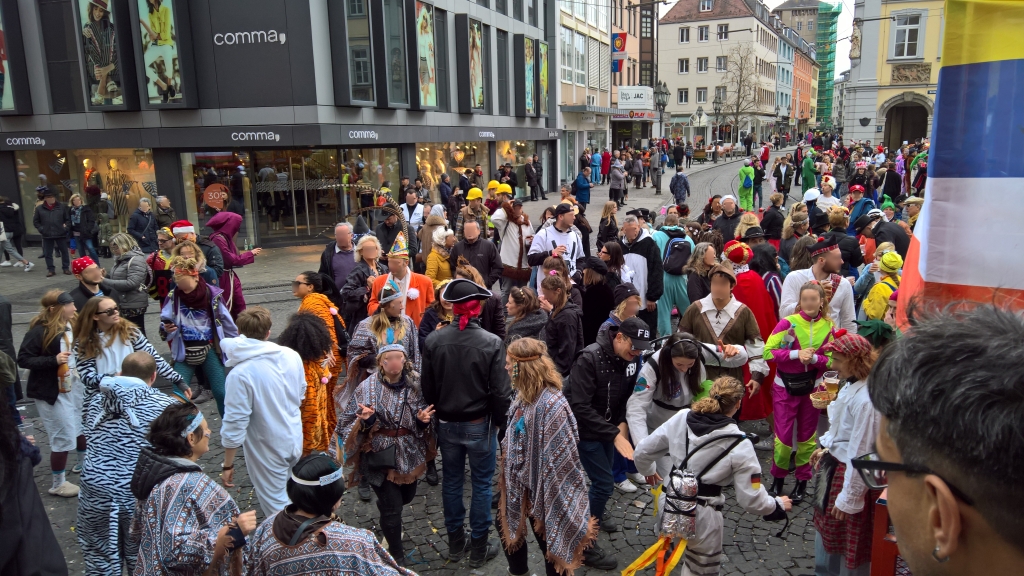
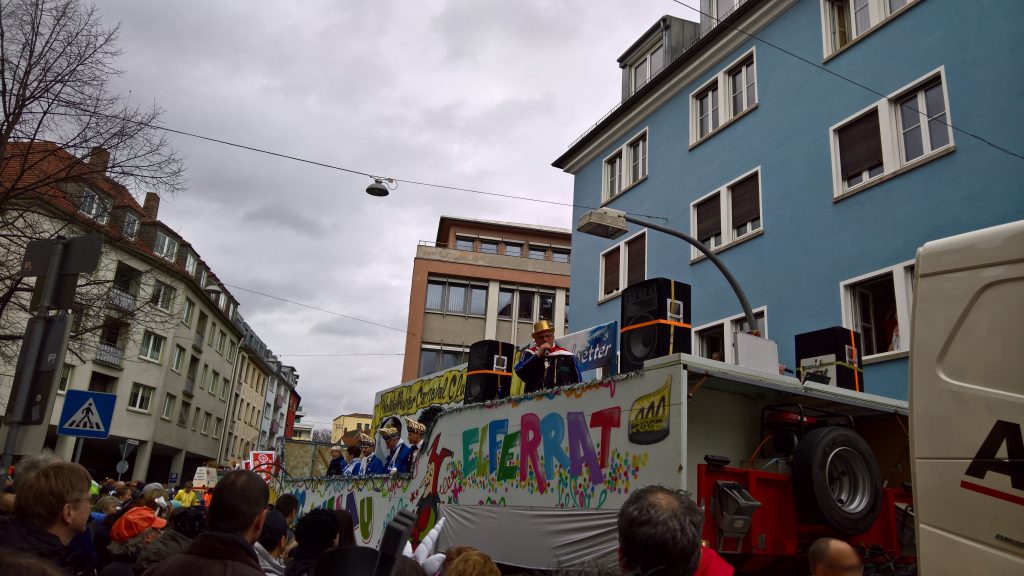
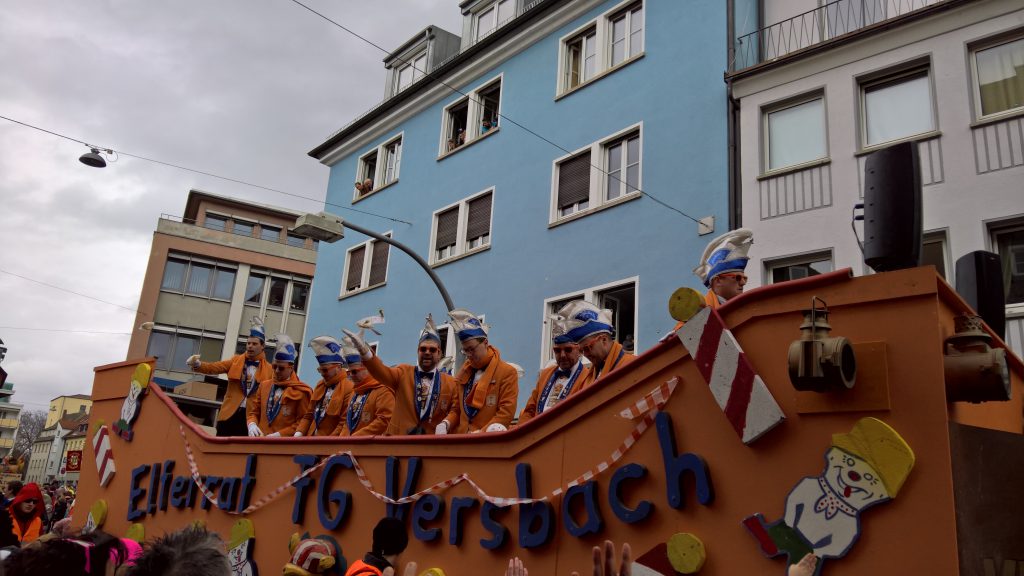
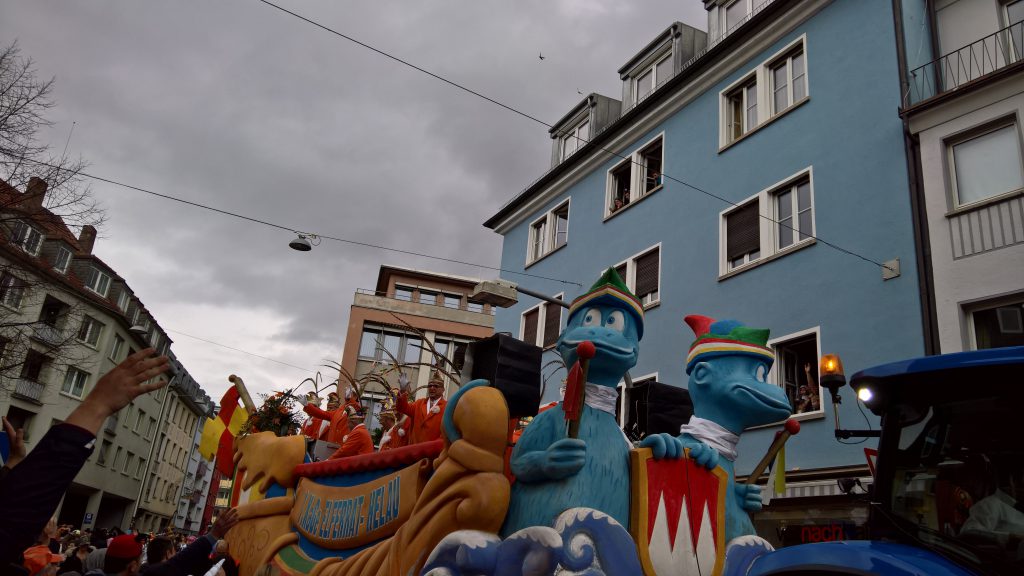
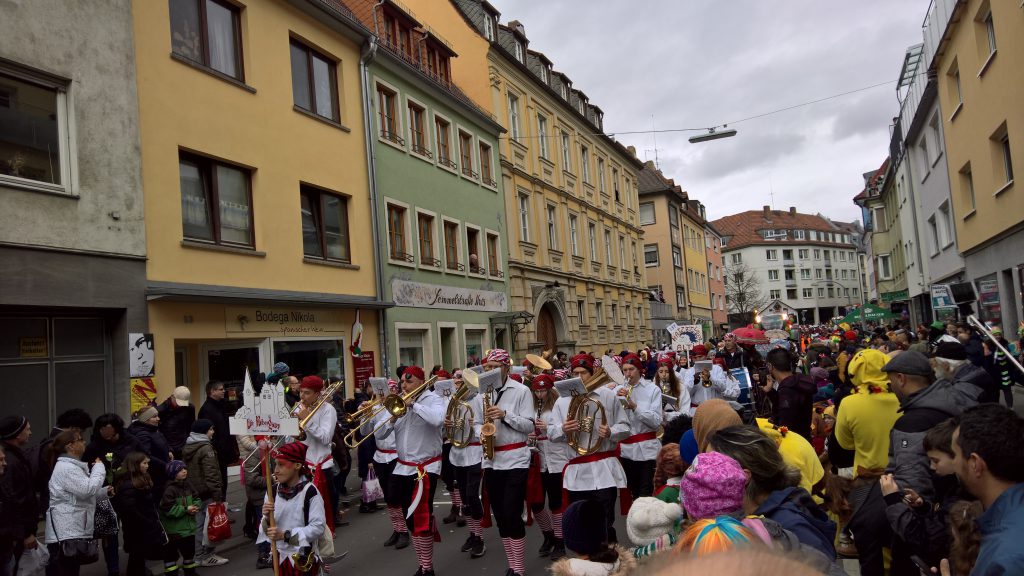
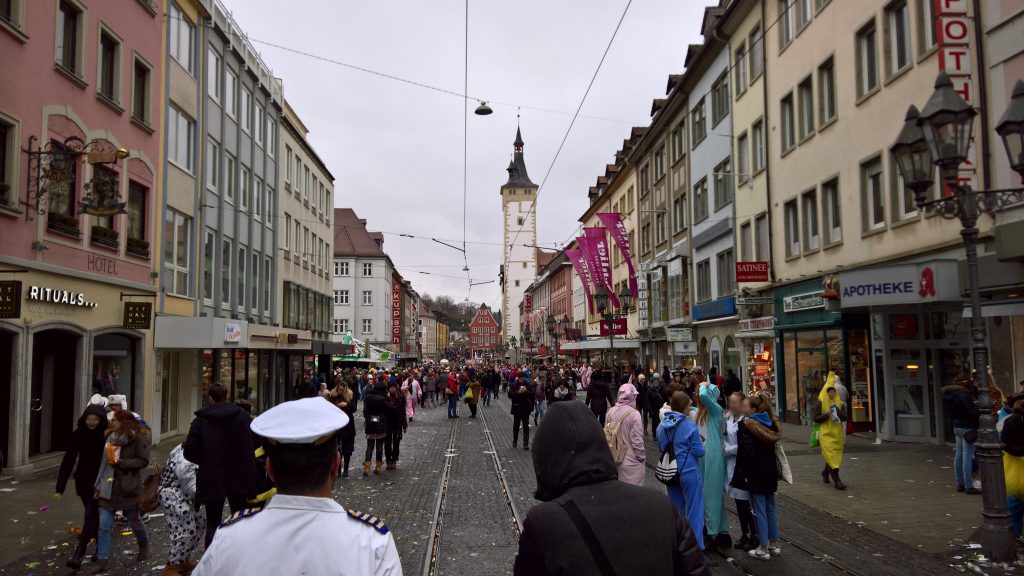
    Straßenkarneval in Würzburg | Foto: Robert Behrendt
    street carnival in Würzburg | Photo: Robert Behrendt

    elements:

    Regionality: How significant the carnival is depends very much on the region. Most are predominantly Catholic regions where a strong carnival culture has developed and maintained. It is particularly popular in the Rhineland (Cologne, Dusseldorf, Aachen, Bonn, Mainz and others). But it is celebrated everywhere, although there is not the same intensity everywhere.

    “meeting carnival”, “street carnival” and “party carnival”:
    Classically you can distinguish between meeting carnival and street carnival. The meetings (“Karnevals-Sitzung”) are special indoor events organized by carnival societies. The street carnival takes place outside and in bars. However, there are also organized events such as the carnival parades or the “town hall storming” (Rathaussturm), in which the fools symbolically take power in the city. Then there are also carnival parties in various forms, be it in bars, clubs, in schools or private.

    Carnival Societies (Karnevalsgesellschaften): These are associations whose members are passionate about celebrating carnivals and, above all, organizing events.

    Carnival meeting (Karnevals-Sitzungen):: They are organized by carnival societies. You have a large, decorated hall full of mostly costumed guests. There are several artists, comedians and dance groups, that perform on a stage. This “Sitzung” is chaired by a session president and the Elferrat. Everything is hilarious, yet there is an ironic serious facade in the process reminiscent of a member meeting of a serious organization. As so often, it is a parody of otherwise serious gatherings. At carnival time, many meetings of the big and well-known clubs are televised. But if you really want to experience it, you have to be there in person. The humor on such sessions is usually not very intellectual, but it’s just about the fun.

    Street carnival (Straßenkarneval ): celebrations on the street and in adjacent bars. It is laughed, drunk and celebrated especially exuberantly. Here are things that are otherwise not possible: For example, alcohol in harsh amounts, public, by day and night. Sentences that would be sexist on normal days are not worth mentioning in the street carnival. Of course it is not always that extreme. But you should be prepared to have fun when you are in the middle of the crowd.

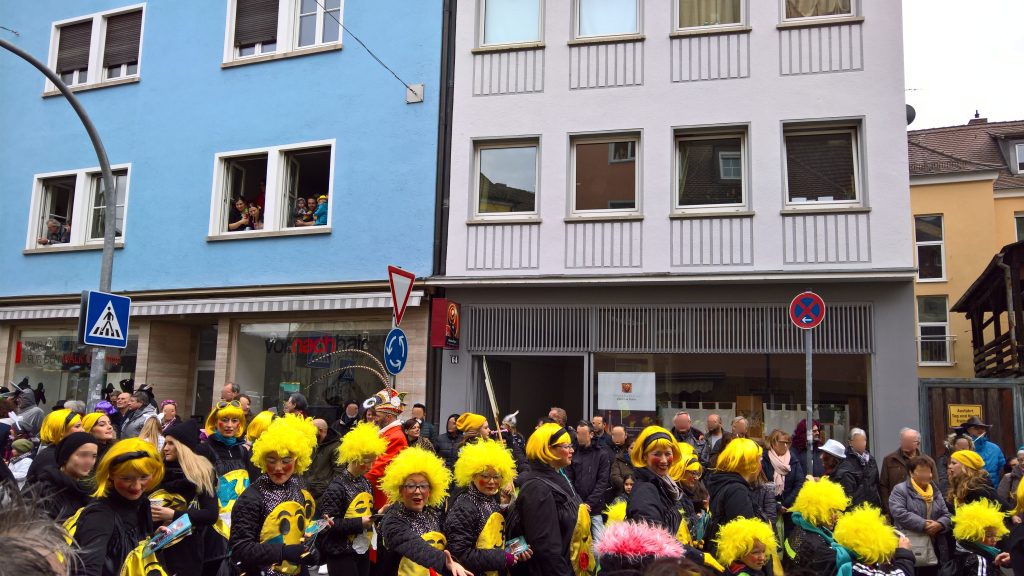
    Carnival parades (Karnevals-Umzüge): They are the highlight of the street carnival. Costumed people are walking through the city on foot or on decorated vehicles. It is also a parade of carnival societies. On the vehicles is celebrated or even current topics recorded critically and humorously. Mostly the “powerful” are mocked. The biggest is the Rose Monday parade in Cologne. But there are also small, cozy parades in many small towns.

    Carnival cries (Karnevals-Rufe): At the height of the Carnival season, there is a special greeting. With him you can also show that you join in the whole bustle. They are also regionally different. The best known are “Helau” and “Alaaf”. One says for example in Cologne “Alaaf” and in Duesseldorf “Helau”. Because a kind of “enmity” exists between these two cities, one should use the correct greeting 😉S

    Schwäbisch-Alemannische Fasnet: Independent, original carnival in southwestern Germany. The elements of the “modern”, Rhineland carnival are not here consciously.
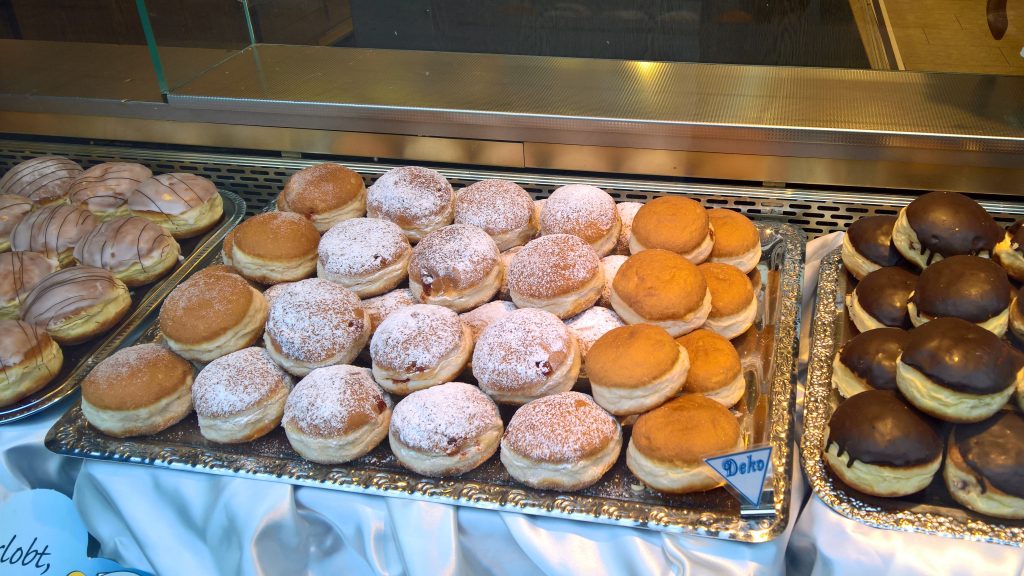
    typical food:
    Krapfen
    (similar to donuts)

    As I mentioned before, the street carnival is sometimes rough. Here is a quote from an opinion article by Dagmar Rosenfeld, editor-in-chief of WELT:

    Carnival will answer the question of how far we go if we let ourselves go. Precisely because on the great days some principles are overruled, they reveal how stable and equal our society is. And that it is so stable, that it preserves decency even in indecency.

    Dagmar Rosenfeld
    https://www.welt.de/debatte/kommentare/article189539633/Genderdebatte-An-Karneval-hat-MeToo-Ferien.html
    historical meaning

    Carnival is the time before the Christian Lent until Easter. The basic forms of the festival in Germany go back to the Middle Ages. Previously, when Lent was still strictly for everyone, all supplies of animal food and alcoholic beverages had to be “used up” until Lent. So it was celebrated a really dissolute party, before fasting was 40 days. In addition, there were still very ancient times customs that should scare away the winter. These are temporally collapsed. As a result, a hilarious party with masks, fairings, etc. has developed. It was also a time when in a few days the “world conditions” were reversed. The servants became masters and vice versa. The “fools” (“Narren”) took power. That is also the reason why there are symbolic “carnival-storms” of the town halls in Germany. Many elements are also from the 19th century. The soldiers were parodied with their uniforms, with their step and discipline. It started with hidden mockery of the Napoleonic occupation troops in the Rhineland. Then to the Prussians, who after the war of liberation against the French in many countries now had the shots. That’s why the traditional stage dances, uniforms, etc. look like military: it’s a parody of the military!

    Schedule

    11.11. (November 11th): Beginning of the carnival season. Historically, because there was a Lent before Christmas in early Christian times. Here the town halls are stormed.

    February / March: Events and splendid meetings of the clubs take place here.

    Closer carnival days: The right Carnival days take place just before Lent, so at a fixed distance from Easter. Because Easter depends on the lunar calendar, which does not quite agree with the solar calendar (365 days), Easter and therefore Carnival fall each year to different dates in the months of February and March.

    • Weiberfastnacht/Weiberfasching: Thursday before Ash Wednesday (Aschermittwoch). This is where the street carnival begins.
    • “Carnival Friday”, “Carnival Saturday” and “Carnival Sunday” -> the weekend before, many parties are celebrated
    • Rose Monday (Rosenmontag) -> The “highlight” of the carnival. Here the famous Rosenmontagszug takes place in Cologne
    • Shrove Tuesday (Faschingsdienstag)
    • Ash Wednesday (Aschermittwoch) -> Here only the ashes remain of the whole festival and it is over). It is interesting that traditionally the parties organize a “political Ash Wednesday”. It’s about talking to your own people and criticizing the political opponent particularly hard.

    Ash Wednesday is the beginning of Christian Lent, which runs until Holy Thursday / Easter. Lent takes 40 days but Sundays are excluded. Lent is traditionally about giving up meat. But in the present day many believing Christians are above all concerned with the symbol. For example, alcohol, sweets etc. are not used. According to a representative survey in 2017, 11% of the population in Germany fast in Christian Lent. This origin is not that significant anymore.

    No carnival day is a public holiday. Rose Monday and Shrove Tuesday are in some areas but days on which the companies release their employees.

    small glossary:

    • “fünfte Jahreszeit” (“fifth season”) -> this is another name of the carnival (the time from November 11th to Ash Wednesday)
    • “Karnevalshochburg” (“Carnival stronghold”) -> where the carnival is particularly strongly rooted
    • “Jeck” / “Narr” / “Narren” (“Fool” / “Fools”) -> Expressions for people celebrating Carnival. You can also use “jeck” as adjective: you can describe it as cheerful, witty, in party mood.

    conclusion:

    In Germany, it’s usually pretty neat. The carnival, however, is a “state of emergency” and “organized loss of control”. There are people who hate it and others who love it.

    If you want to join in a tip: you should know if you are in the area where you say “Karneval” or “Fasching”, or something else. And what the regional exclamation is: For example, “Helau” or “Alaaf”. You do not have to dress up consuming, something colorful is enough. Otherwise, only: good mood!
  • Recommendations for movies and series

    Recommendations for movies and series

    Here I would like to list some important or recommendable German films, series and television series. Background: Until 1933, the German film had world renown. Today he is not that important internationally. But there are still good films and some good series that are fun and also provide an insight into the country.

    Movies

    Das Leben der Anderen (2006)
    Drama, History
    Surveillance of the GDR state security in the cultural scene of East Berlin, playing in the 1980s

    Die Blechtrommel (1979)
    novel adaptation
    Story about an unusual child in Germany of the 1930s and 1940s, interesting with a look into this time.

    Der Untergang (2004)
    Drama, History
    well made film about the last days of Hitler and the last fights in Berlin Especially as it shows a part of the man of Adolf Hitler (based on the memories of his secretary)

    Das Boot (1981)
    War drama, thriller
    Submarine war in the Atlantic in World War II, action and experiences of the crew.

    Film review by The Critical Drinker

    Baader-Meinhof-Komplex (2008)
    Drama, about the RAF, left-wing terrorist group in the 70s.

    Eberhofer movies (Rita Falk – novel adaptations)
    Mixture of comedy and Bavarian homeland crime. Attention! They speak often Bavarian …
    – Dampfnudelblues (2013)
    – Winterkartoffelknödel (2014) – Winterkartoffelknödel – OFFIZIELLER TRAILER
    – Schweinskopf al dente (2016) – SCHWEINSKOPF AL DENTE – offizieller Trailer
    – Grießnockerlaffäre (2017)
    – Sauerkrautkoma (2018) – SAUERKRAUTKOMA – offizieller Trailer

    Lammbock (2001)
    Comedy. Two friends who run a pizza delivery service in Würzburg, but also grow marijuana.

    Good Bye, Lenin! (2003)
    Comedy in which a son of his mother fooled over years that the GDR persists.

    Sonnenallee (1999)
    Comedy, about the life of East Berlin youths in the 1970s

    Werner
    Animation, comedy with North German humor, based on the Werner comics (for adults)
    – Werner – Beinhart (1990) – Werner Beinhart Fankanal
    – Werner – Das muss Kesseln!!! (1996) – Werner 2 – Das muß kesseln!!! | Trailer
    – Werner – Volles Rooäää!!! (1999)
    – Werner – Gekotzt wird später! (2003) – Werner 4 – Gekotzt wird später! | Trailer
    – Werner – Eiskalt (2011) – Werner Eiskalt – Trailer

    Herr Lehmann (2003)
    Tragic comedy, set in 1989 in West Berlin

    Berlin Calling (2008)
    Film about a Berlin DJ. The main role is played by the real Berlin DJ Paul Kalkbrenner – Berlin Calling (2008) – Trailer

    Series

    Babylon Berlin
    Series about the Berlin of the 20s

    Türkisch für Anfänger (Serie, Comedy)
    Comedyserie über eine Deutsch-Türkische Patchwork-Familie

    Der Tatortreiniger
    Comedy series about a “crime scene cleaner”, so someone who professionally cleans the place after a crime.

    4 Blocks
    Drama series, about Arab clans (Mafia) in Berlin.

    Tatort (English “crime scene”):
    Crime series with 90-minute episodes, which comes on Sundays 20:15 clock in the first German television.
    It is the most popular thriller series in the German-speaking countries. There are a number from Munich, Berlin, Dortmund, Dresden, Frankfurt, Stuttgart, Kiel, Freiburg, Wiesbaden and even more (including Vienna, Austria and Lucerne, Switzerland). There are then about one to four crime scenes in one city per year.
    The crime scenes should be realistic and comprehensible. In recent years, there have also been some “experimental” crime scenes that play a little bit with reality. In addition, current topics are taken up.
    The character of the rows is always a little different. Often, the personality of the investigators and the interaction of the teams in the foreground. There are also series that are rather comedies: Münster and Weimar “Tatorte”.
    The basic concept is always the same: 1. There is a murder (typically someone dies in the first few minutes). 2. The murderer is identified (it is typical that he / she is not determined until the very end).
    The setting, so the places, the characters timeless and current topics but very diverse. There are also some fan clubs and people meet for a common “Tatort-watching”. How well known and popular the “crime scene” is, you can also see in the detail of the Wikipedia article:
    https://de.wikipedia.org/wiki/Tatort_(Fernsehreihe)

    Polizeiruf 110 (English “Police call”):

    In the GDR, the “Polizeiruf 110” was produced as a counterpart to the West German “Tatort” since 1971. (Tatort: Start 1970 in West Germany). The police riot films are also thrillers, but in the GDR period there are differences in details and peculiarities, the reasons lie in the completely different state system. In contrast to the “western”Tatort there was usually no murder, but it was “minor” crimes enlightened and it was more the police work in the foreground and less action.
    After the reunification, the “Polizeiruf” has become more akin to the Tatort, but it still exists, especially in East German cities.
    When the police call I can recommend the from the city of Rostock (shot since 2010). Also the police Munich with “Hanns von Meuffels” (2011-2018) are recommended.

    Documentary / docutainment

    In terms of documentary I can’t recommend anything special, because there is a lot of interesting things around. In addition, it depends heavily on your own interests. I only introduce a few documentation series here.

    Terra X
    The documentary brand of ZDF. There you find well made documentaries on really many topics.
    Terra X (ZDF, Mediathek)
    Examples: 
    Die Geschichte des Essens (1/3) – Vorspeise
    Ritter (1/3): Helden aus Eisen (Entstehung des Rittertums) 
    Ein Tag in Berlin 1926  -> Experience the life in Berlin, in the year 1926
    Kanada – Schatz der Kälte
    Russland von oben (1/5)  -> “Russia from above” about landscape highlights and the people who live there

    Also interesting:
    ZDF-Produktionen in 360° 

    Phoenix “History
    https://www.phoenix.de/sendungen/dokumentationen/phoenix-history-s-121553.html

    Phoenix “dokumentationen
    https://www.phoenix.de/sendungen/dokumentationen-s-121583.html

  • Christmas

    Christmas

    After writing about the Christmas season in another post, I would like to write about the festival itself. About what is closely related to time, Christmas Eve, the Christmas holidays and the time after Christmas.

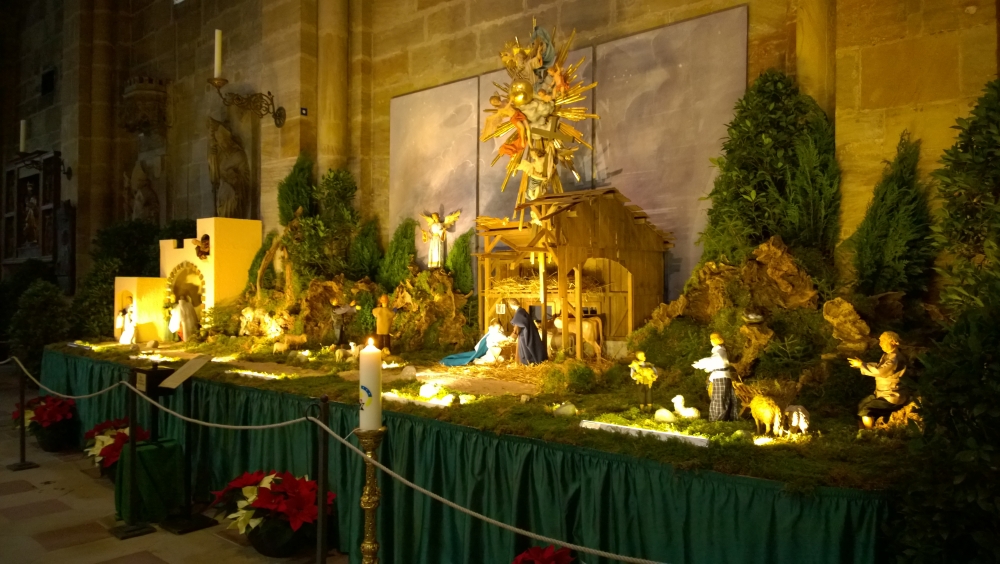
    Nativity scenes and nativity plays: Of course part of Christmas is the biblical Christmas story . Mainly in the churches “cribs” are set up. These are a model representation of the stable scene in the Christmas story. In addition in some places a play is practiced and performed by the children of the parishes.

    The Christmas season is also time of stories and classic films. On television, many fairy tales are shown. There are classics that have been shown again and again for many years: For example, “3 Haselnüsse für Aschenbrödel” (3 hazelnuts for Cinderella), the Swedish “Michel from Lönneberga” stories of Astrid Lindgren or “Der kleine Lord” (Little Lord Fauntleroy).

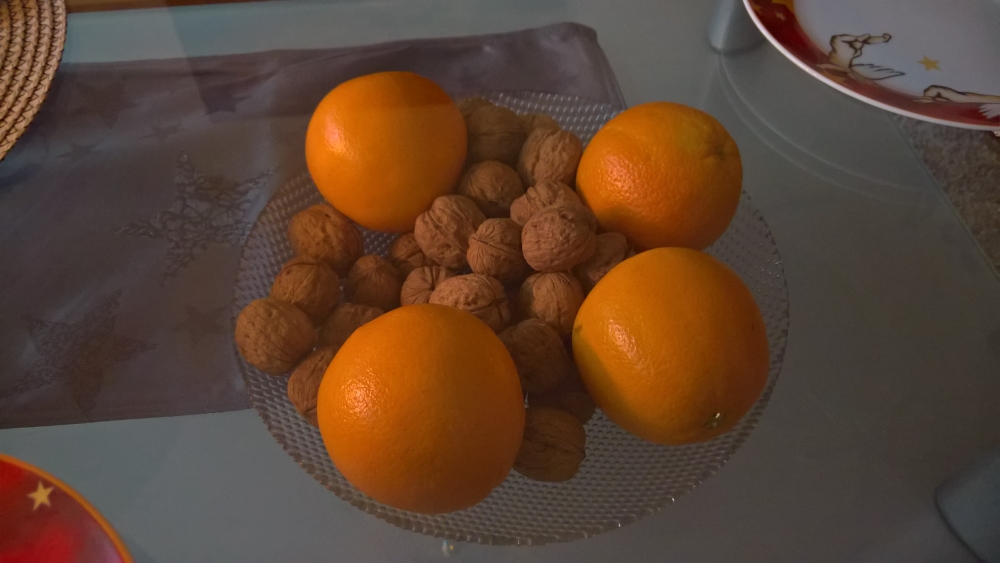
    At Christmas time you can often see oranges / tangerines, apples and nuts. Background: In the past, these things were not available year round. Apples mature in the fall and are therefore abundant at this time. Nuts are also easy to store and provide plenty of energy in the cold winter. Oranges and tangerines are ready for Christmas (in Southern Europe), so they will be given away for Christmas.

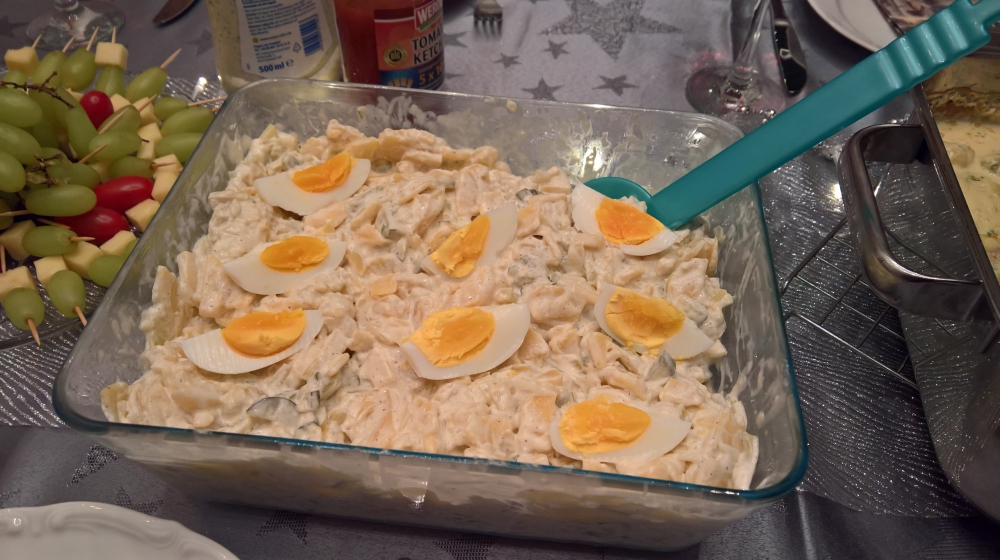
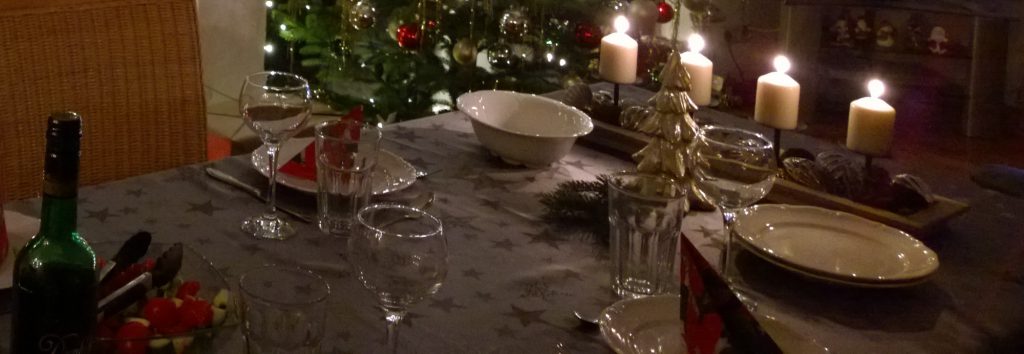
    Christmas Eve (Heiligabend), as well as the first and second Christmas Day is designed differently depending on the family tradition. December 24 is not a public holiday. The shops are usually open only until noon. Many people use this as a last resort for shopping. That’s why you should organize the things you need for the festival in advance. During the day the last preparations are made. Traditionally, the Christmas tree is also set up and decorated on this day. The food is prepared and relatives travel to their visits. Believers attend the services. For many people it is one of the few church visits in the year. The evening is usually designed as a quiet celebration in the family. In some families, singing songs or playing instruments is customary. But for those who don*t do it theirself there are concerts, shows, fairy tales etc in TV. Board and card games are also popular. There is definitely delicious food. On Christmas Eve, however, there is the custom of eating sausages with potato salad. This is a simple meal, as a contrast to the elaborate dishes in the next two days.
    The gifts will be distributed at the “Bescherung”. If there are children in the family, then a Santa Claus is engaged, who presents the gifts. But that’s not easy! Be prepared to recite a poem or sing a song to get the gift. Depending on the region the “Christkind” (Christ Child) brings the presents. This is of course not to be seen, so the children can be surprised by the fact that the gifts are suddenly there. Even if no special Santa Claus comes, then usually someone who will distribute the gifts – including fun factor. Big or small gifts, bought or homemade. Everything is possible what you can imagine. The most important thing is that you spend a nice evening in the family.

    Appearance of Santa Claus: Has developed from “Nikolaus” (St. Nicholas). The look of Santa Claus was very various until the 30s. There were different ones. often inspired by the bishop-origin. Coca Cola in the US did not invent Santa Claus, but he has made the red-and-white style popular worldwide and unified it! It was used for an advertising campaign, with red and white chosen from their own colors.
    The Christ Child: Martin Luther, as a reformer of the church, rejected the worship of saints (Catholicism) and sought a replacement for Nicholas, who was a bishop and was canonized.

    The first and second Christmas day will also be used for visits. And of course, to try the gifts 🙂 In these days meals are very well. Very typical are goose or duck with red cabbage and dumplings. Often one uses the time for visits with relatives. Ironically, Christmas is always associated with family quarrels. Especially when meeting relatives who do not really like each other. And of course you can not force harmony and contemplation … When the party is over and you do not see it for a long time, everything is fine again. See you next Christmas …
    To find out what the Germans really do on 25 and 26 December, you have to ask them. That is different according to taste. One can of course assume that there are people who do not join in all this bustle. These Christmas muffle are looking for these days occupations that have nothing to do with Christmas. Or they go on vacation at the time!

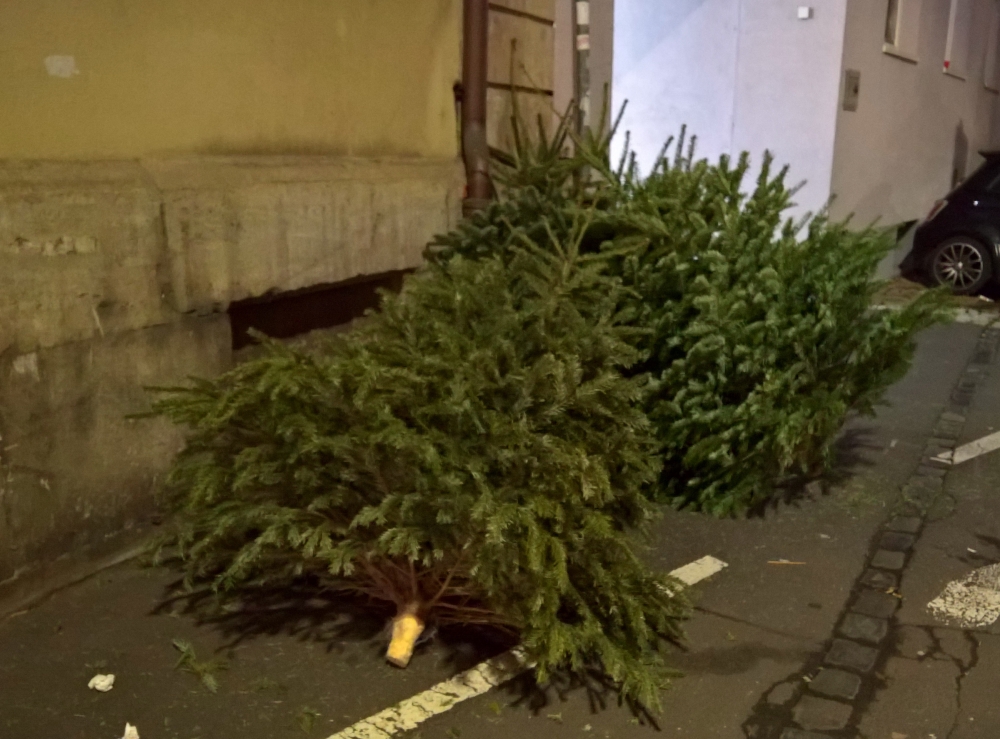
    The time between Christmas and New Year’s Eve is also called the “Zeit zwischen den Jahren” (“time between the years”). Many people take a vacation. Some companies do not work or almost do not work at all., But with New Year’s Eve the quiet time ends . Traditionally, the Christmas tree and all other decorations will be dismantled on January 6th. The decoration will be stored and is waiting for the next Christmas. In Germany, of course, its regulated how the Christmas trees are disposed of! Either there is a special date, at which the city cleaning makes an extra Christmas tree tour to collect everything. Or (usually in smaller places) there is a small cozy party, the “Christmas tree burning”, in which usually the local fire department burns all the Christmas trees of the place in a big fire.

    Christmas trees, ready to be picked up! | Photo: Robert Behrendt

    January 6 is the day of the Magi (“Heilige 3 Könige” / holy three kings). This is especially important in Catholic regions. In some states it is also a public holiday. There is the tradition of the “Sternsinger” (“star singers”). Thereby children draw as holy 3 kings dressed in the houses, sing and collect donations for the poor, etc. In large places you have to order them. As a conclusion you get a blessing at the front door. It is the last part of all Christmas dates. This will be the end of the year.

    Christmas is a Christian festival enriched by geography and history. Winter solstice is the highlight of the cold, dark winter and the end of the year. Germany is Christian in its history, and Christians celebrate the birth of Jesus Christ at this time. This festival has become an integral part of the culture. The religious aspect is still noticeable, but is now only one part. Most of the things I’ve described here are beautiful traditions and customs even without the religious occasion. Regardless of origin, people without faith or other religions also more or less commit to traditions. It is the time of light in the dark, the review of the old year and a look into the new year. It’s holidays for the family, contemplation, peace … So it’s something that is important to all people.

    Photo: Robert Behrendt
  • Christmas Time

    Christmas Time

    I would like to give an overview of the Christmas season and Christmas itself with some of its customs. I can only show a section, because there are many regional features of which I don’t know myself. Each family also has its own traditions and procedures. In addition, I am not a Christian, so Christmas for me has less to do with religion, but more with family and rest in the middle of winter.

    Christmas, the Christian festival celebrating the birth of Jesus Christ, is more precisely the 24th of December (Christmas Eve / Heiligabend) and the 25th and 26th of December (1st and 2nd Christmas Day / 
    1. und 2. Weihnachtsfeiertag). The weeks before are called pre-Christmas time.

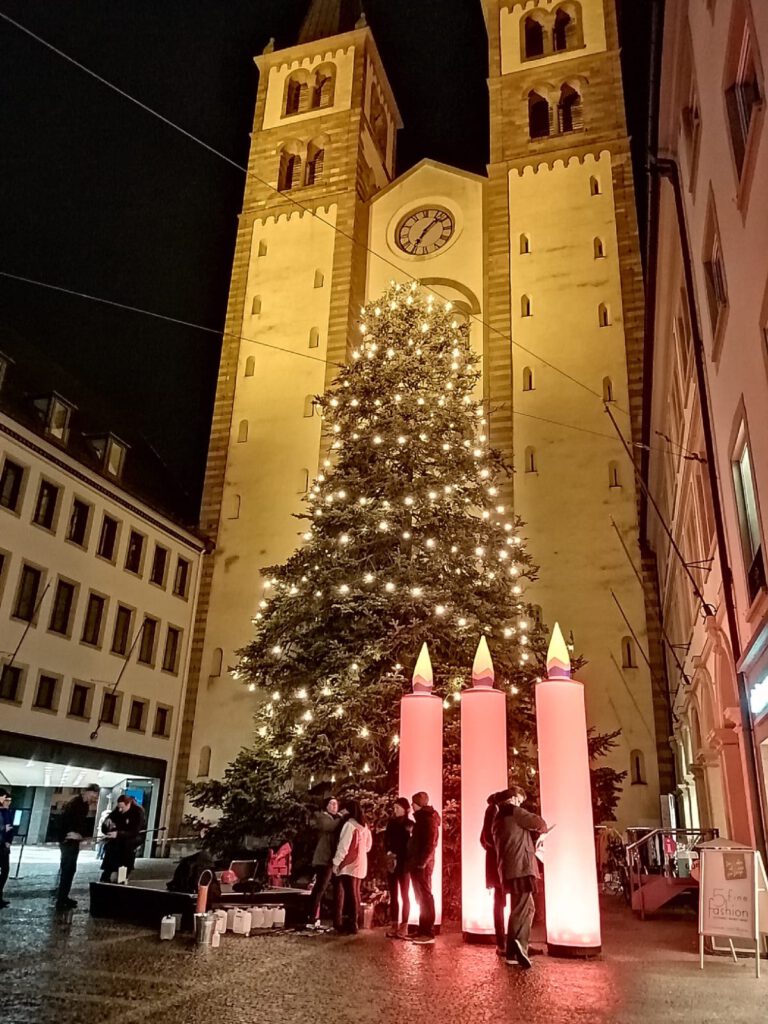
    This Christmas season (Weihnachtszeit) really starts with the first Advent. The 1st to 4th Advent, these are the 4 Sundays before Christmas. There is the custom to set up an Advent wreath. Traditionally it consists of fir green, on which there are 4 candles. Each Advent Sunday, another candle is lit. Fir green, like the Christmas tree, are classic decoration. They symbolize as evergreen plants (also over winter time) the nature / the life / the spring after which the people long back.
    Of course, the advent calendar with its 24 doors must not be missing. The classic version of our time is filled with small chocolate figures. But nowadays, everything can be in there. Cosmetics, literature texts, tea or sex toys for adults. You can also make a calendar from a box of beer. The imagination knows no limits. The basic idea is 24 little surprises every day from December 1st to 24th to make waiting easier. Although impatient and addicted to chocolate open all 24 doors at once to eat the chocolate.

    Decorations

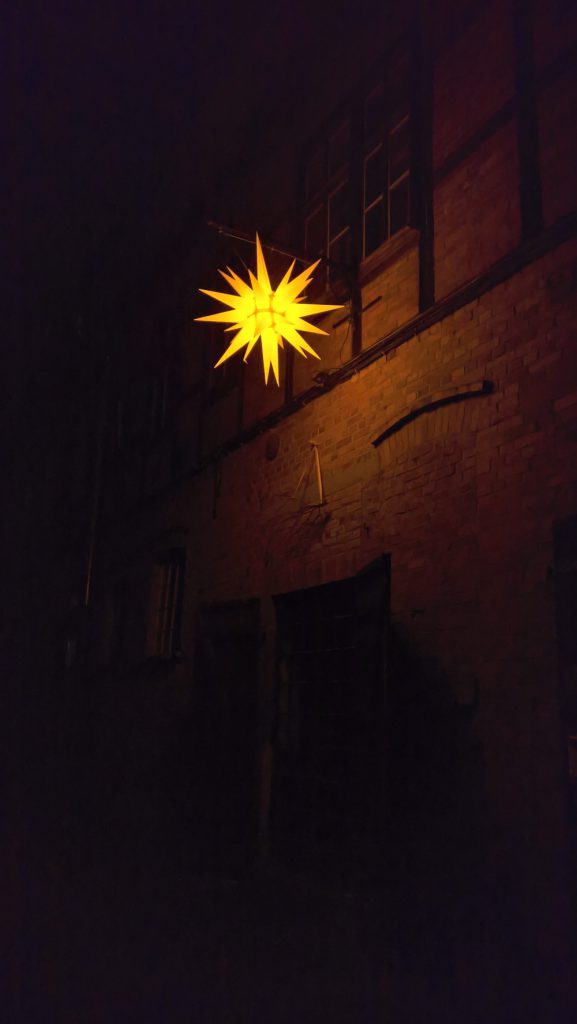
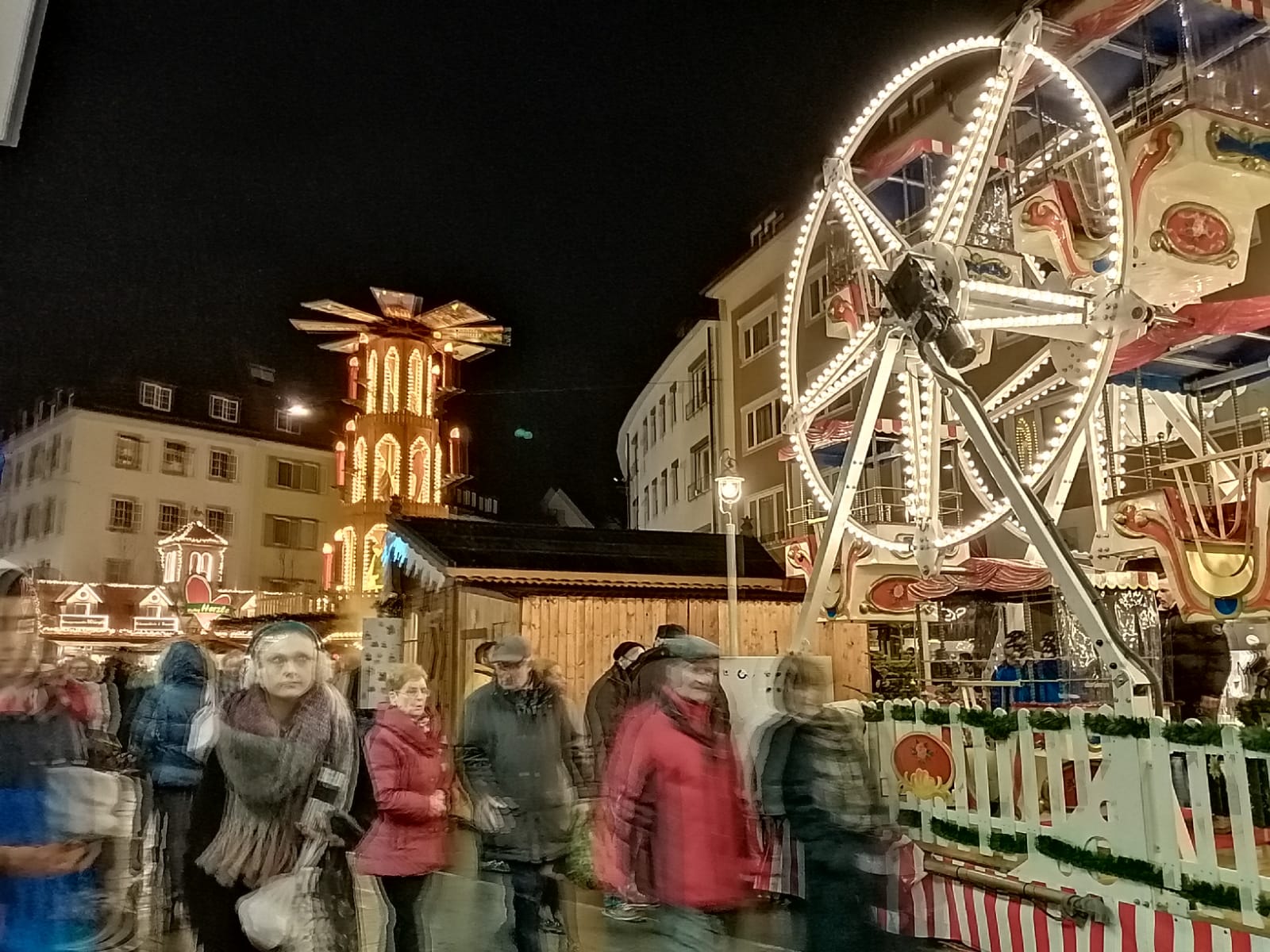
    The Christmas decoration (Weihnachtsdekoration) will be set up on the first weekend of Advent and will last until the 6th of January.Examples of typical Christmas decorations are: the candle arch, the smoking man, the gingerbread house, the nutcracker and the Christmas pyramid. Fairy lights in all possible forms are also part of the Christmas decoration. Also shops in the city and many companies decorate at Christmas time. However, excited flashing and color-changing lights spring rather Asian taste, so as most of the lights decoration is made. The nicer decoration is calm and stylish.

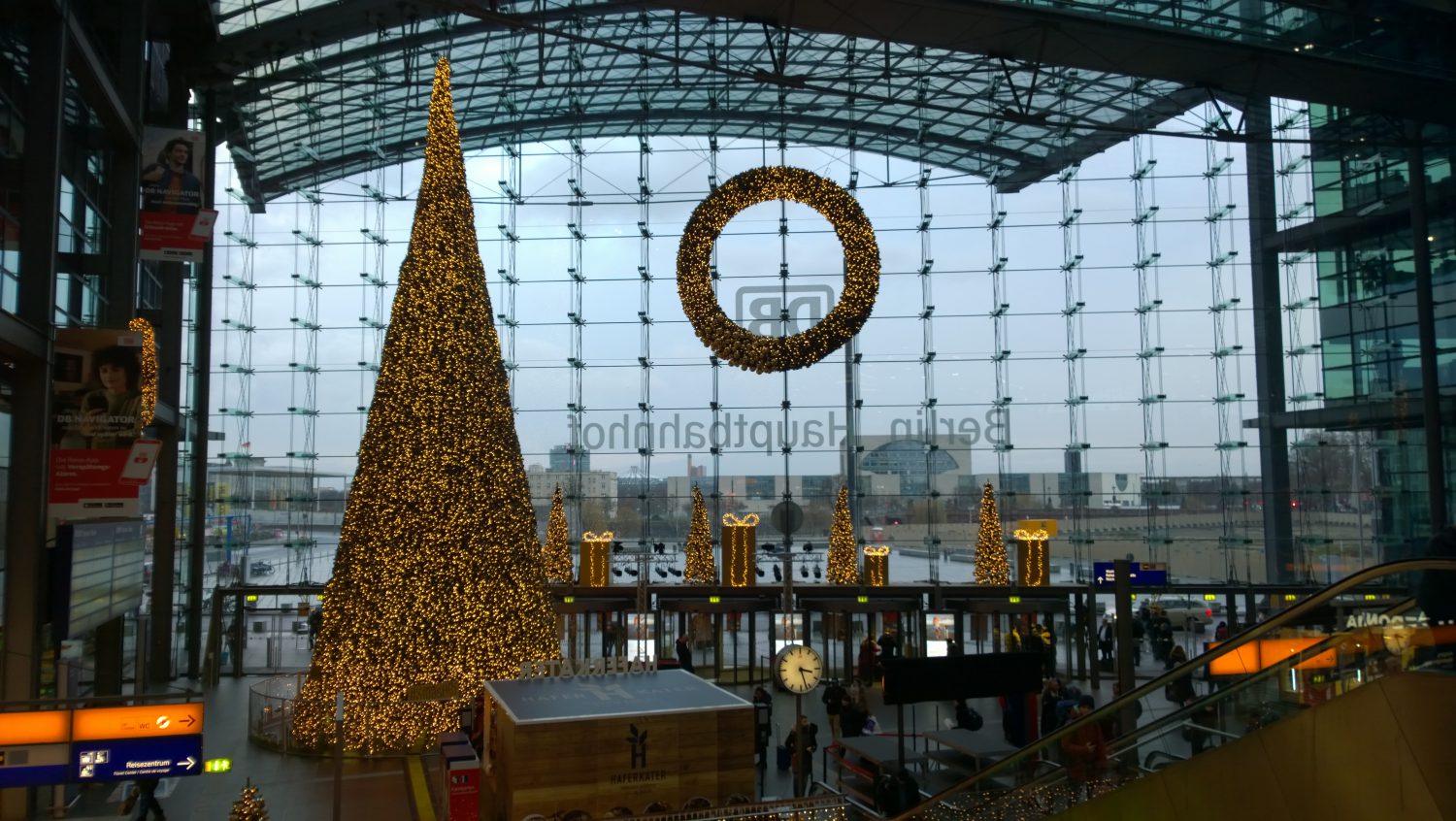
    Christmas decoration in Berlin main station, picture: Robert Behrendt

    St. Nicholas

    December 6 is St. Nicholas Day (Nikolaus). In Germany there is already a foretaste of Christmas on this day by giving small gifts. There is the following custom: the children clean their shoes or boots and put them outside the door overnight. The next morning, the shoes are filled with small gifts: But only if they are well cleaned, because diligence is rewarded! Who does not clean his shoes properly gets nothing. In addition to shoes, in some places plates are set up overnight. Nowadays children almost always get something, even if they were not good. It has developed to the fact that there is a Nicholas in kindergartens, elementary schools or similar places a Nicholas who brings small gifts. It’s because at Christmas, the people won’t meet. In early times, Nicholas brought the actual gifts on December 6th. However, the messing (Bescherung) has wandered into Christmas in Germany as well as in other countries. Then Santa Claus or the Christ Child (depending on the region) brings the presents. In English-speaking countries, the gift-bearer is also called Santa Claus and comes for Christmas. Not only the name, but also the secret delivery of presents at night corresponds to the German tradition. It is not boots or plates, but stockings in which the gifts are placed. The idea is the same – only the appointment is different.

    obligatory things…

    Christmas parties (Weihnachtsfeiern) are among the obligatory things in clubs, businesses and other organizations and groups to have a Christmas party. The occasion and thought is the same, it is also a joint meeting at the end of the year. Otherwise, they can have very different moods. It can be a cozy coffee-drinking in the old people’s home or a common restaurant visit of a company or department. Or a big party of the company or association. Especially with companies, this is one of the few occasions when you organize a party with all your colleagues. It is usually funny to “extremely funny” ;).

    In the pre-Christmas period, one often speaks of “Weihnachtsstress”  (english: “Christmas stress”). This arises through the preparation of the festival. Especially by getting gifts or organizing trips or Christmas dinner.

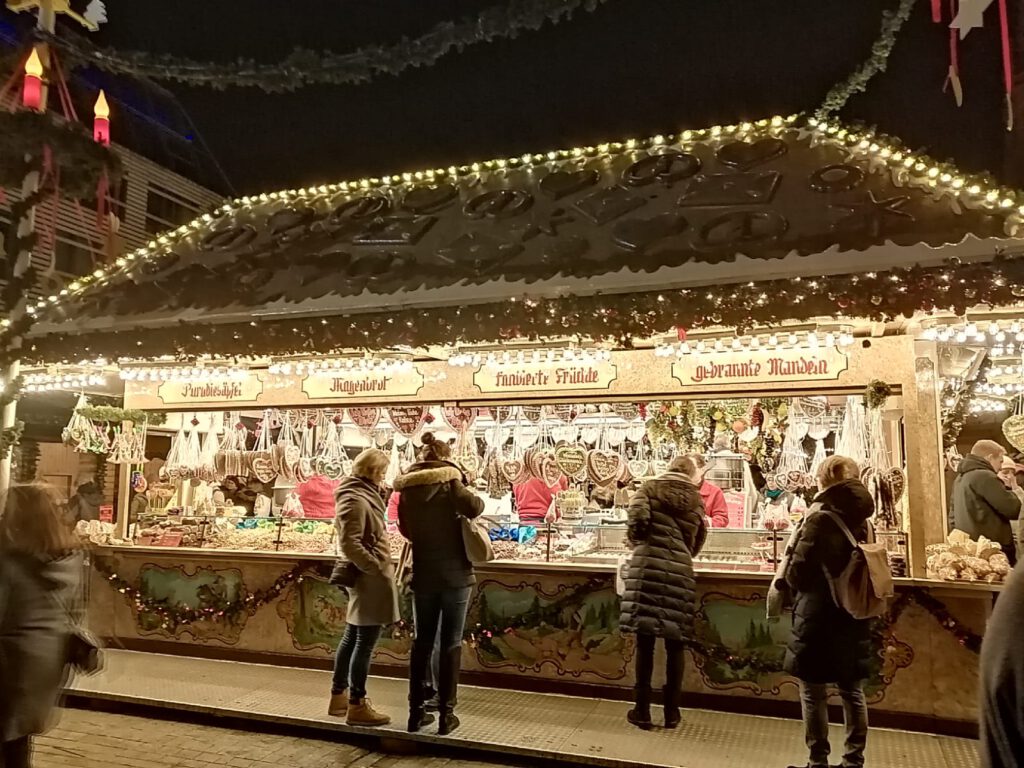
    For Christmas cookies (Weihnachtsgebäck) only the following: There are many different varieties, sometimes known only regionally. Everywhere but are known cookies (german special name: Plätzchen), Stollen, gingerbread (Lebkuchen), cinnamon stars (Zimtsterne), specula (Spekulatius) …In the shops, Christmas cookies are usually offered at the end of October. The early date has nothing to do with tradition, but with sales. Home-made, it tastes almost always better. Especially nice is the Plätzchen-cookie baking at home.

    Plätzchen | Photo: RB

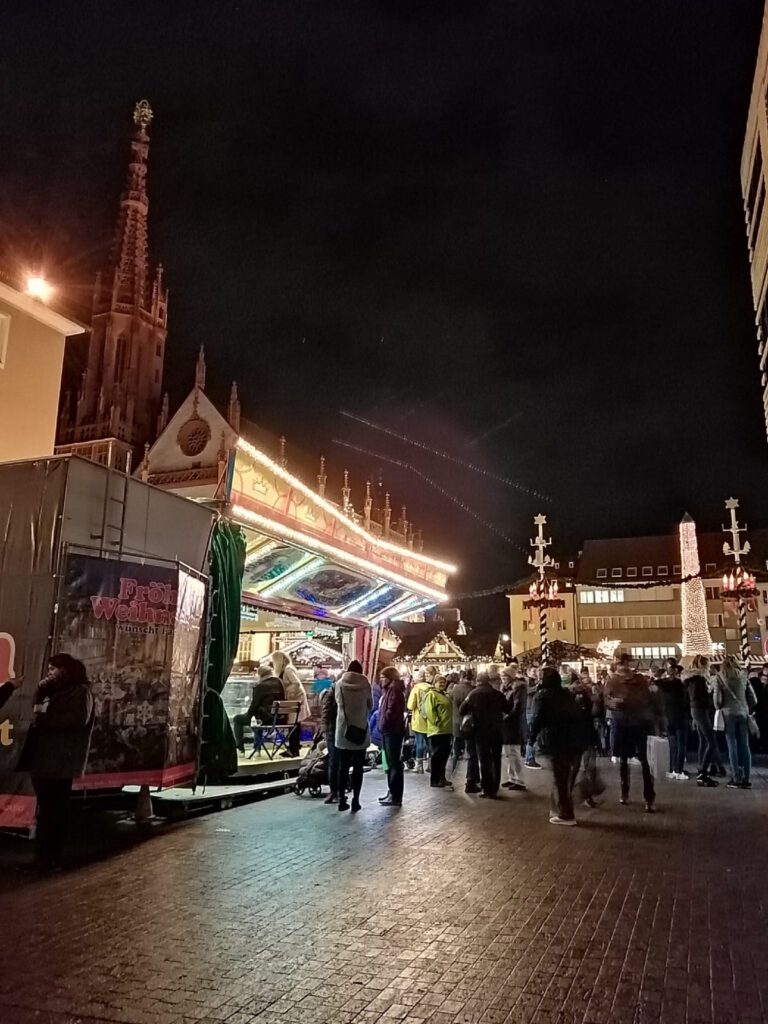
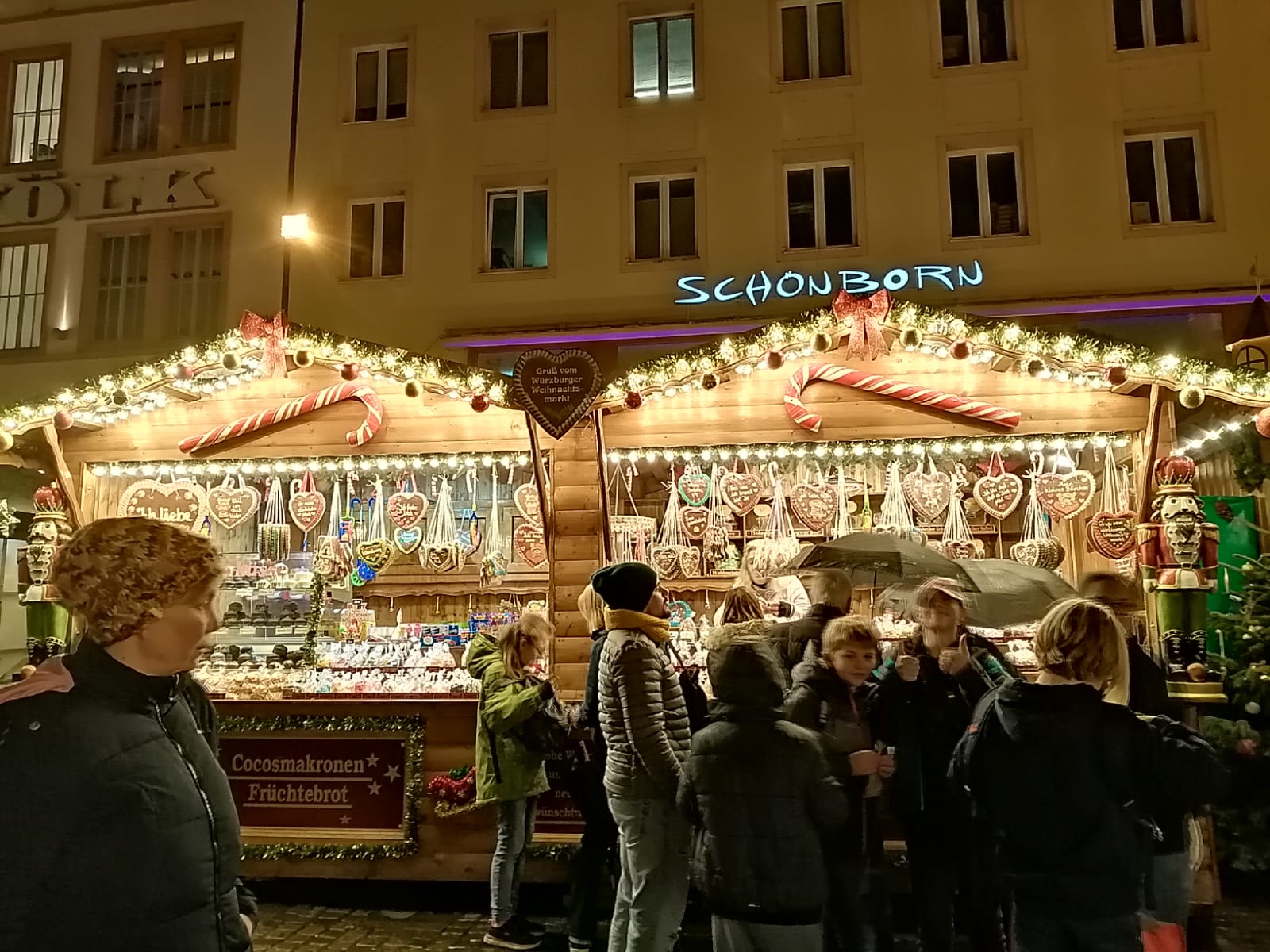
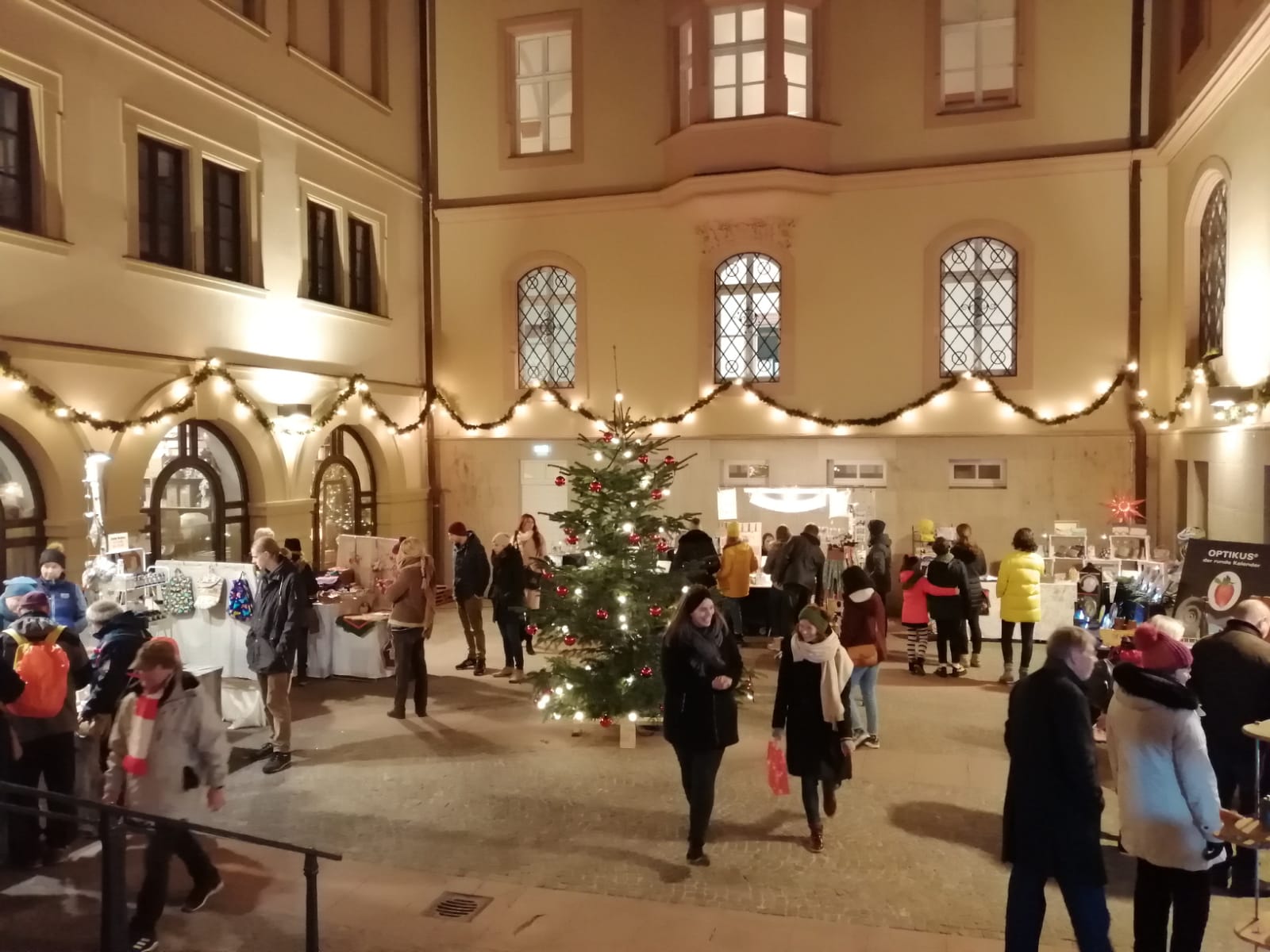
    Christmas Markets

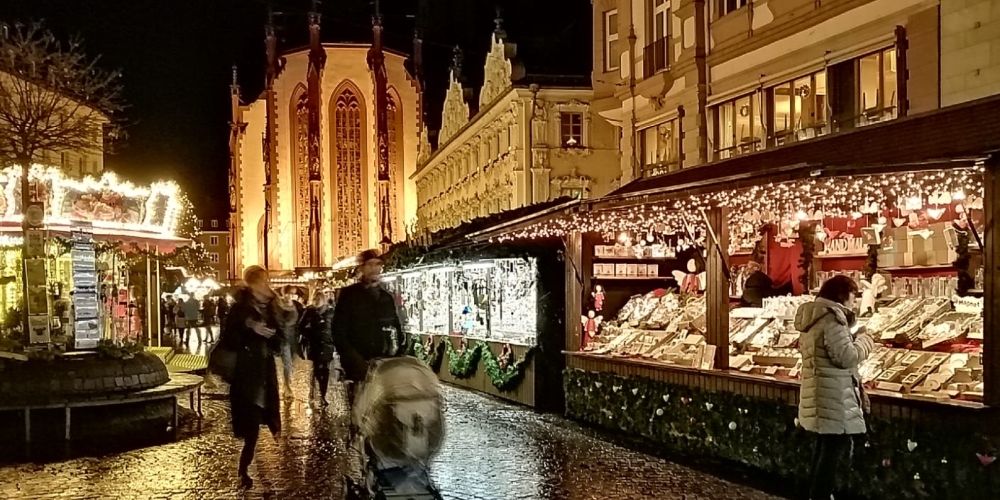
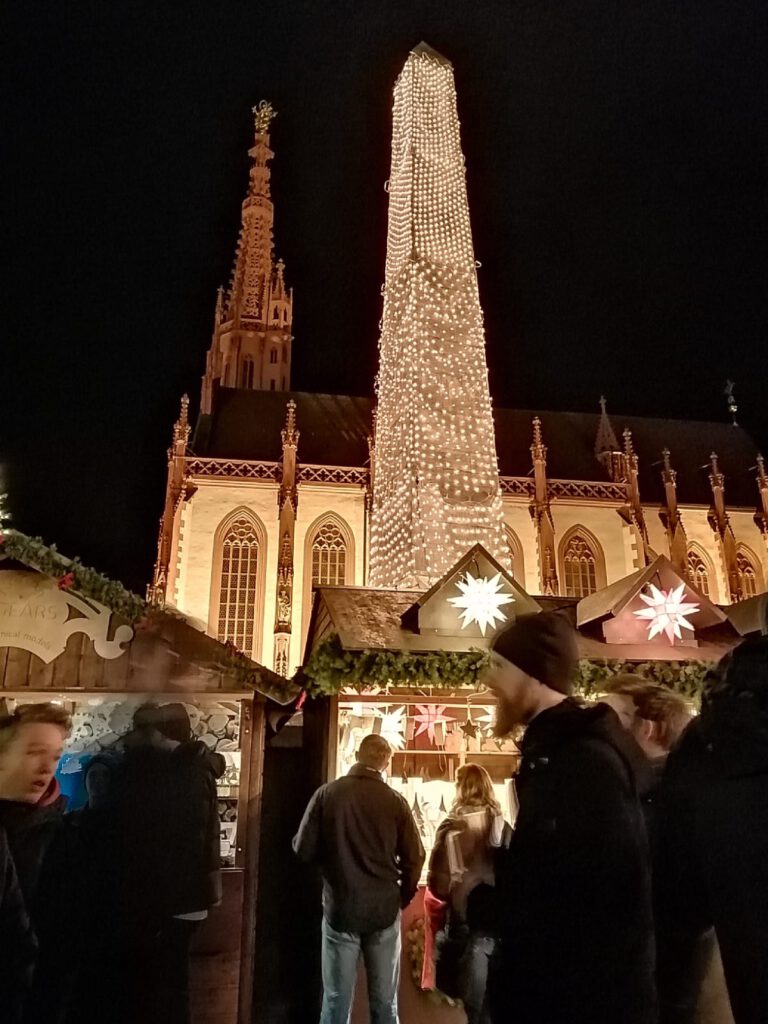
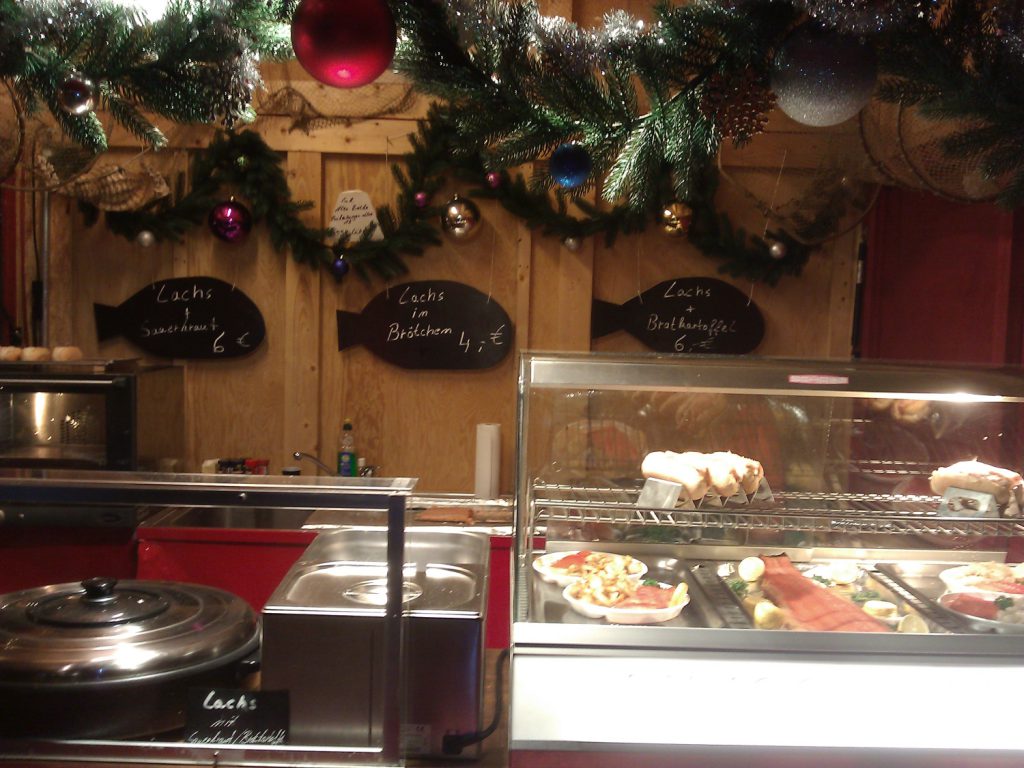
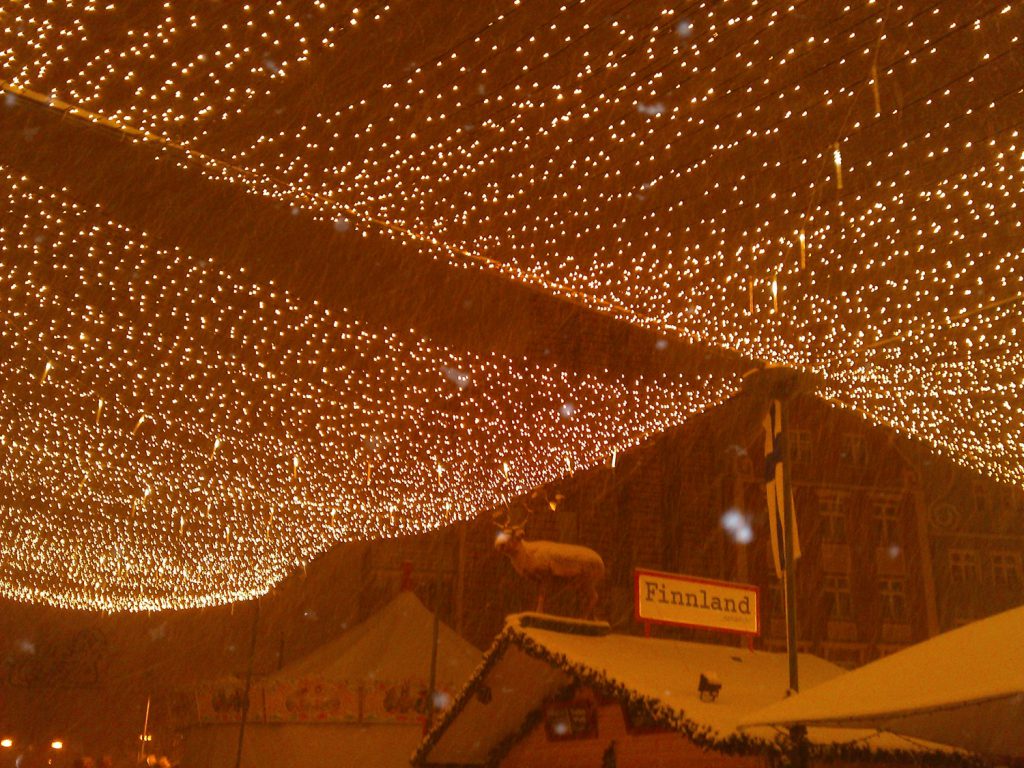
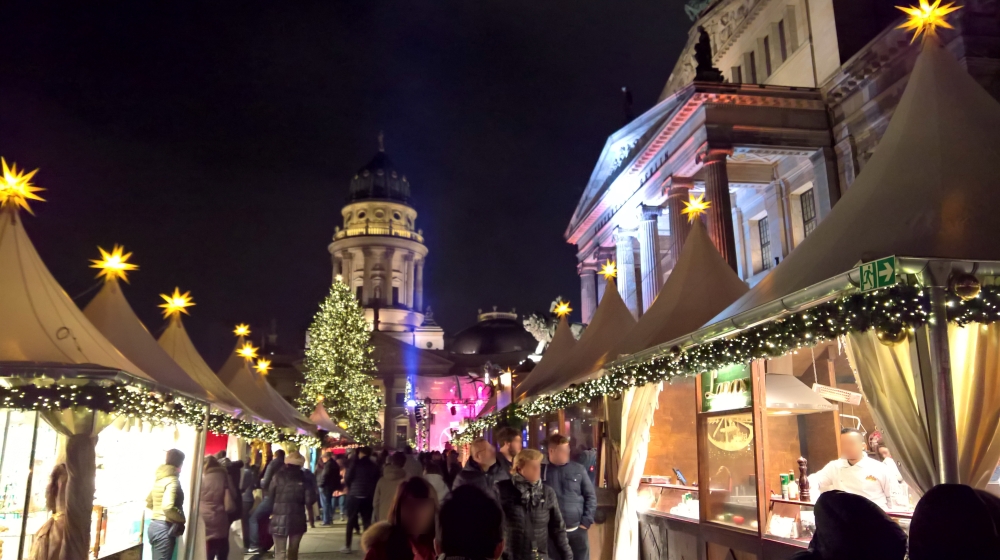
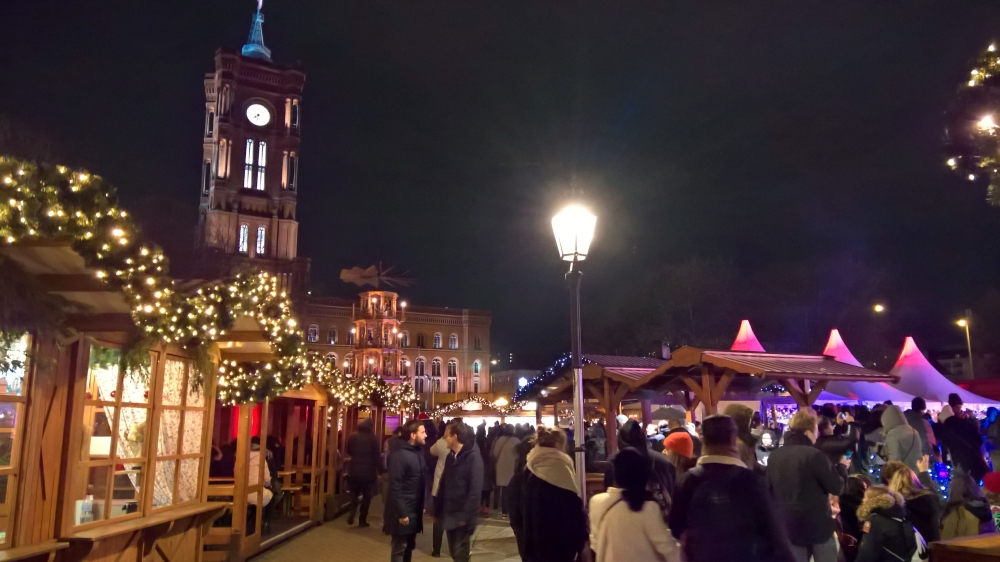
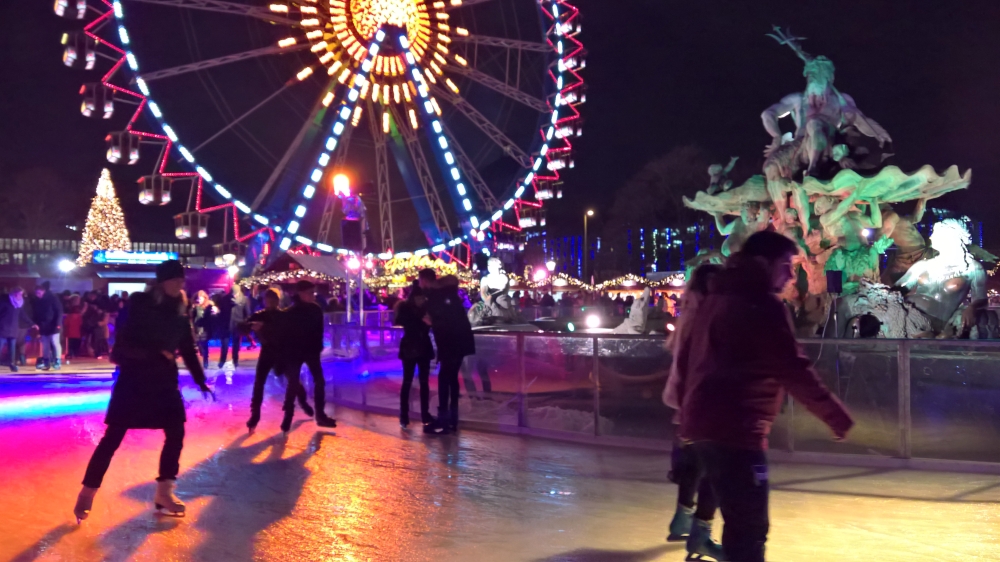
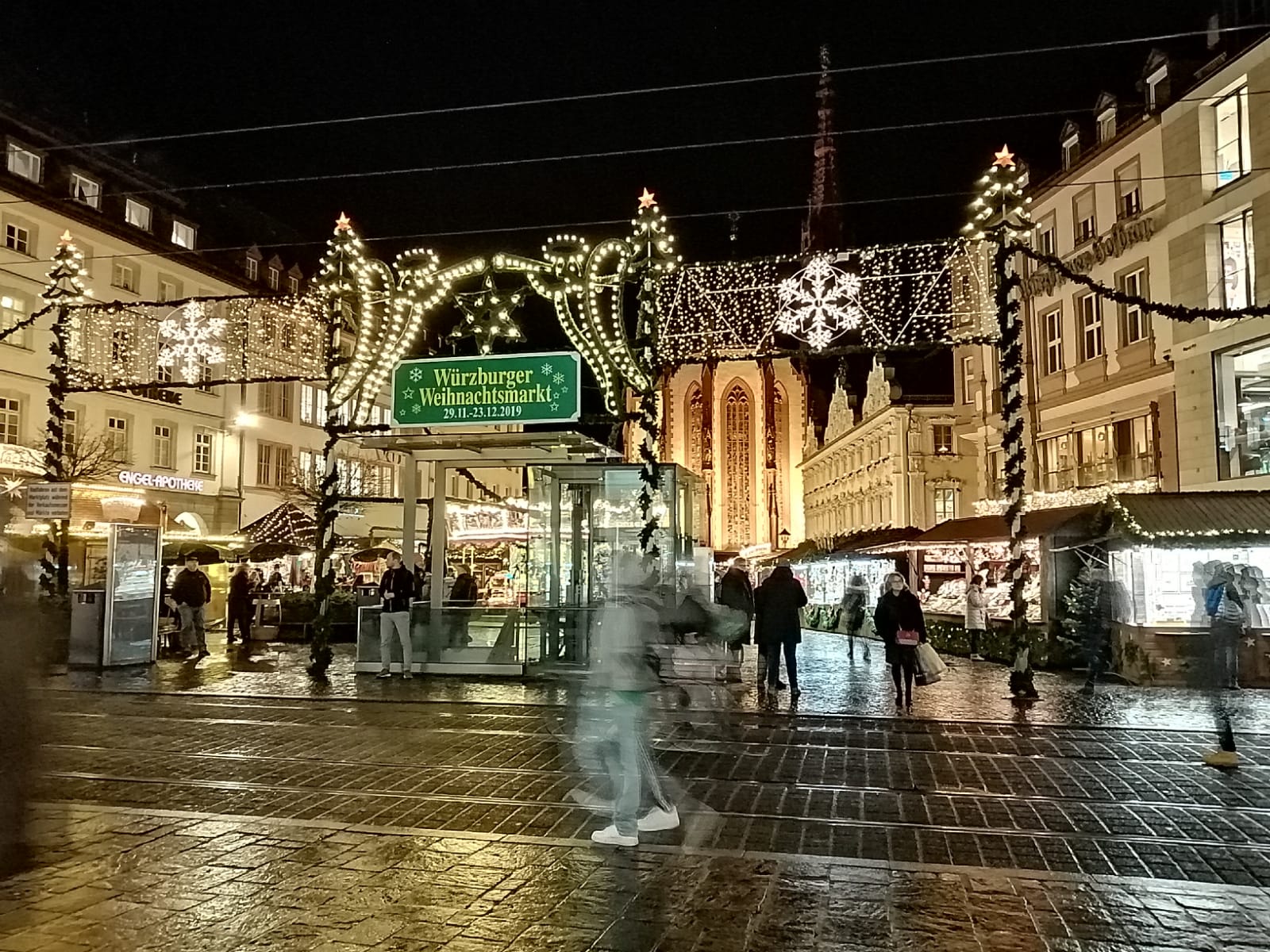
    Christmas markets are mainly in German-speaking countries, Germany, Austria, Switzerland. They take place during the pre-Christmas period, ie the end of November to the end of December. Traditionally, they are already finished before the actual Christmas days. Most of the time they close for 22/23. December. You visit them with family or friends. In festively decorated stalls you can find delicious food as snacks, you drink hot drinks and can look around for small gifts.
    Normally you are not outside for a long time at this time of the year – but in this occasion its comfortable in cold temperatures. You will find a quiet, pleasant atmosphere that you can just enjoy.

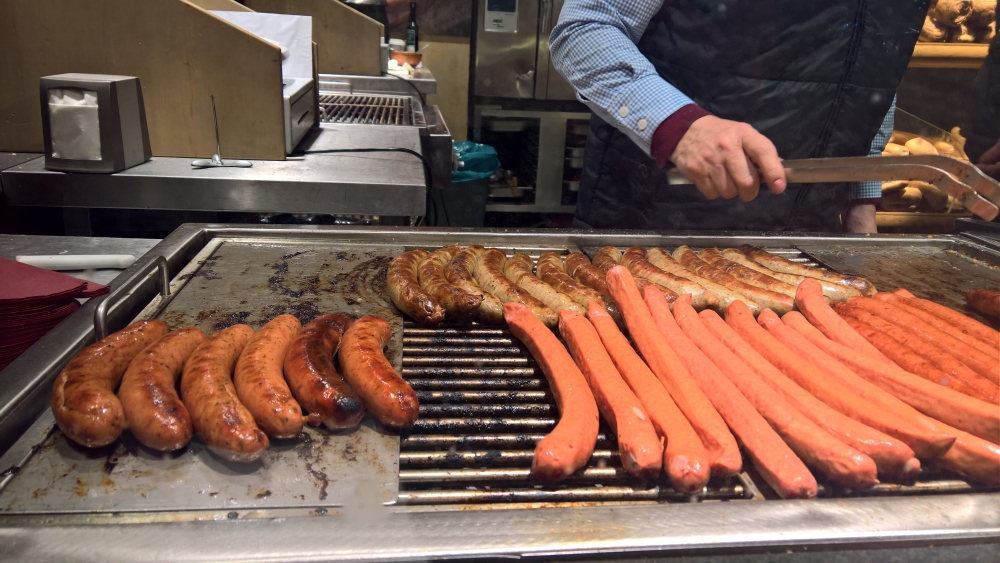
    Depending on the size of the city there are bigger and smaller Christmas markets. Very large cities often have several ones in different parts of the city. The smaller markets in small towns usually do not last long. They often take place only a few days or a weekend instead. But they are often more comfortable and organized by the local residents. There are lots of little things to eat. The classics are bratwurst, roasted almonds, waffles and hot chestnuts. Usually you drink mulled wine. This is hot wine with spices and sugar (cinnamon, cloves, lemon, etc). Usually it is red wine, but there are also white mulled wine. Who ordered “Mit Schuss” (“with a shot”) receives some rum or Amaretto in the mulled wine. If you like it without alcohol, you can drink a punch or a fruit punch (“Früchtepunsch”). It’s also common to warm your hands on the hot glasses.

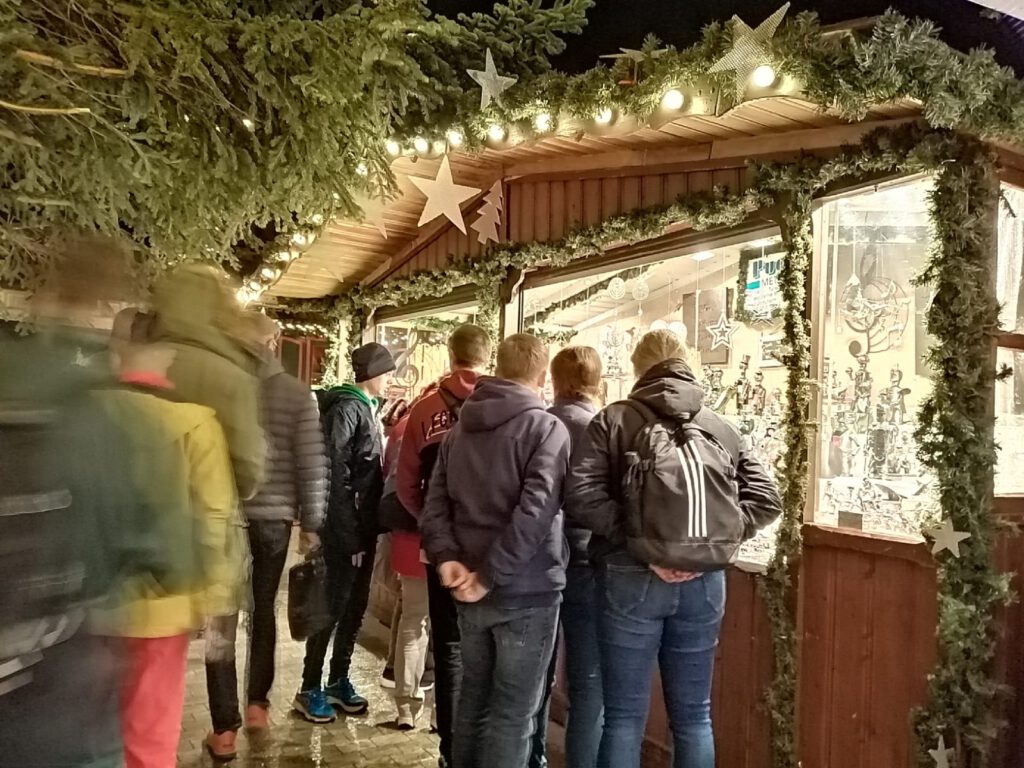
    You can also buy presents and decorations at the Christmas markets. It is of course very nice when they sell hand-crafted things. These are often available on special smaller markets. Of course, there are always differences and special orientations. For example, medieval markets where you can drink warm mead. There are also markets with many rides and annoying music. Traditional markets can be recognized by the fact that no music or only live music is played. Christmas markets often have proper names such as the “Dresdener Striezlmarkt” or the “Nuremberg Christkindlsmarkt”.
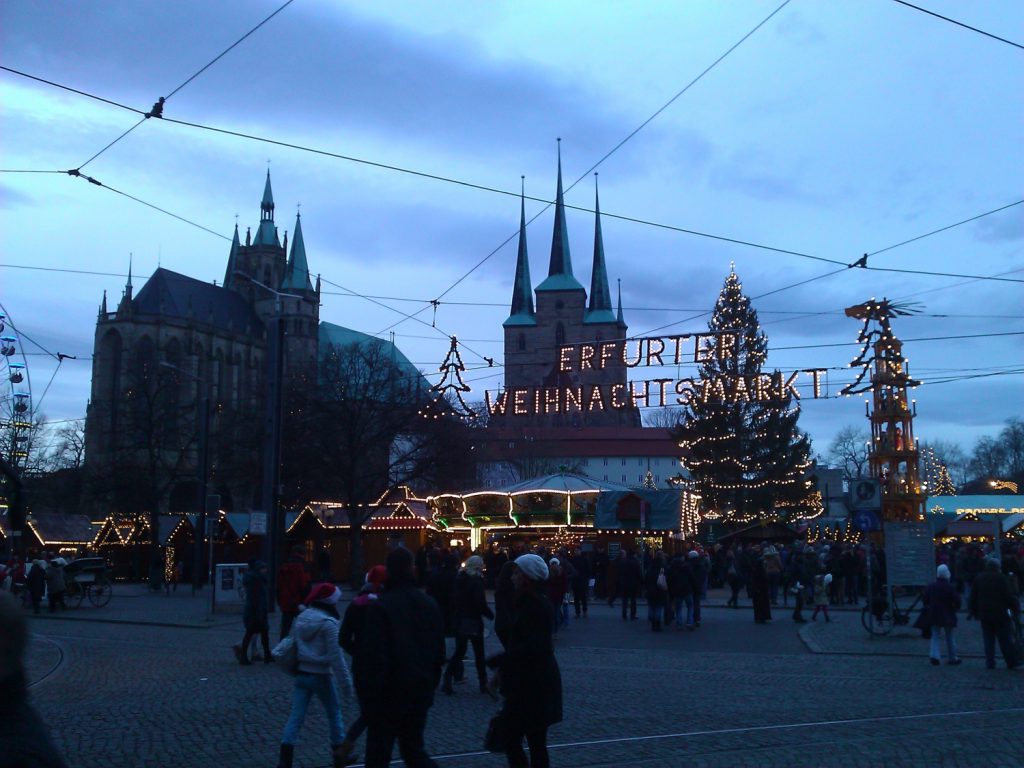
    For a visit I personally recommend the Christmas market in Erfurt.

    What is the origin of the traditional decoration?

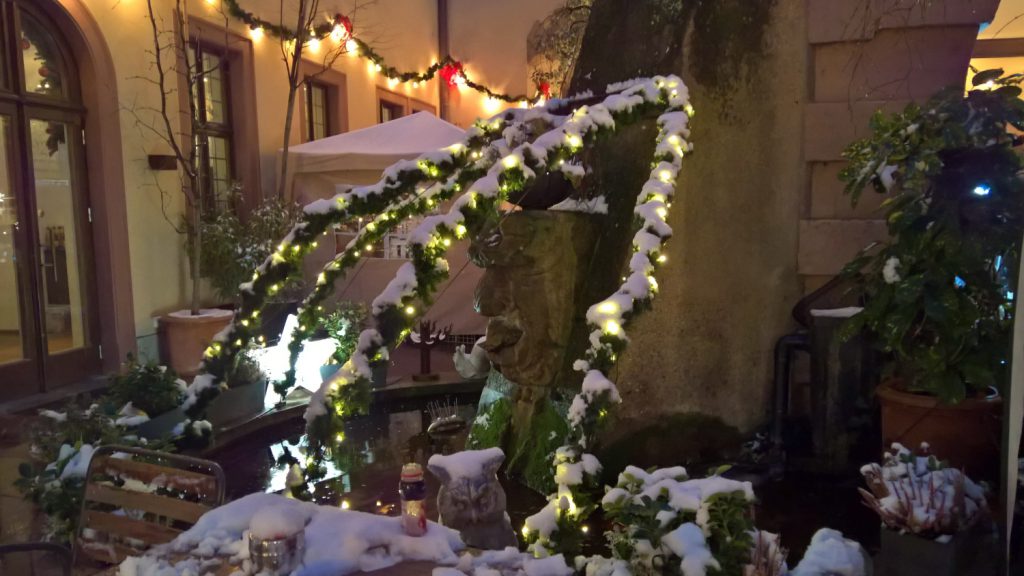
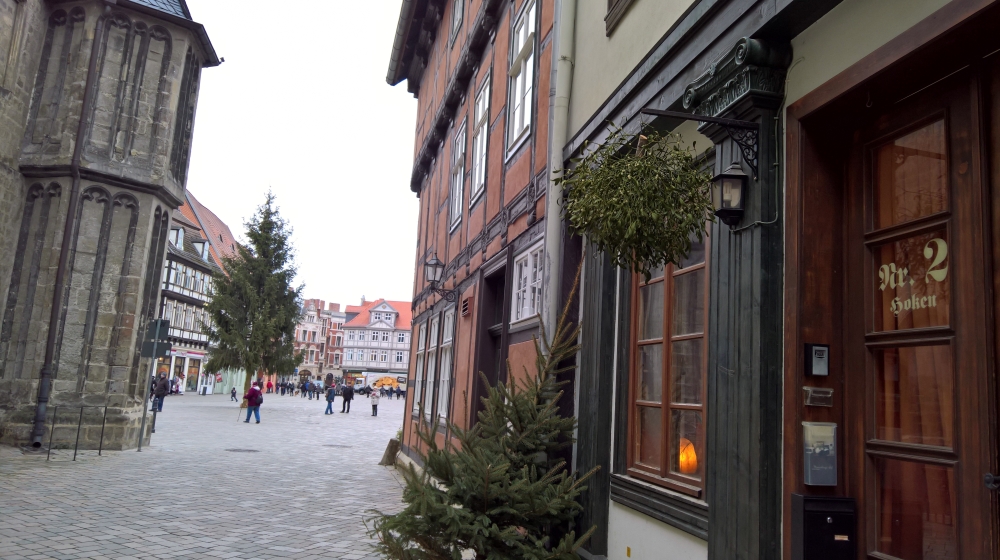
    The Christmas season in December is the time in which the days are shorter and therefore there is little daylight. The shortest day is the day of the winter solstice on 21th or 22th of December. On this minimal short day pass from sunrise (about 8:15 clock) to sunset (about 16:15 clock) only 8 hours. Therefore, the decoration with light is especially common. You have been longing for the light of the sun for a long time now. With Christendom, Jesus Christ was added as “light in the dark world”. It is also the time when all the leaves of the deciduous trees have fallen off. It is (normally) cold and it can snow. In this situation, conifers have a special meaning. They are evergreen plants and the only trees that remain green even in winter. They have therefore become a symbol of life and a return of spring. Branches of coniferous trees such as fir trees have become a classic decoration. The same goes for mistletoes.

    So also the Christmas tree in Central Europe, in Germany, has become part of Christmas. In some parts of Germany it is also called “Christbaum” instead of “Weihnachtsbaum”. Things are hanged on for decoration. In ancient times, food was hung on him. How it is decorated is left to the imagination, taste and style. The important thing is that he has a tip!
    Precisely because ecological thinking is widespread in Germany, a real tree is preferred. Real trees are authentic, plastic trees are sometimes practical, but definitely not nice! In public places it belongs to the normal Christmas decoration and stands during the entire Advent season. In private, in the family, he is traditionally set up and decorated privately on Christmas Eve or the days before. It was bought fresh a few days earlier, in DIY stores, supermarkets, on Christmas markets or directly on the Christmas tree plantation.

    conifers and mistletoes in Quedlinburg | Photo: RB

    Special thanks to Gayane Karapetyan for the Photos (inclusive featured image)

Consent Management Platform by Real Cookie Banner